
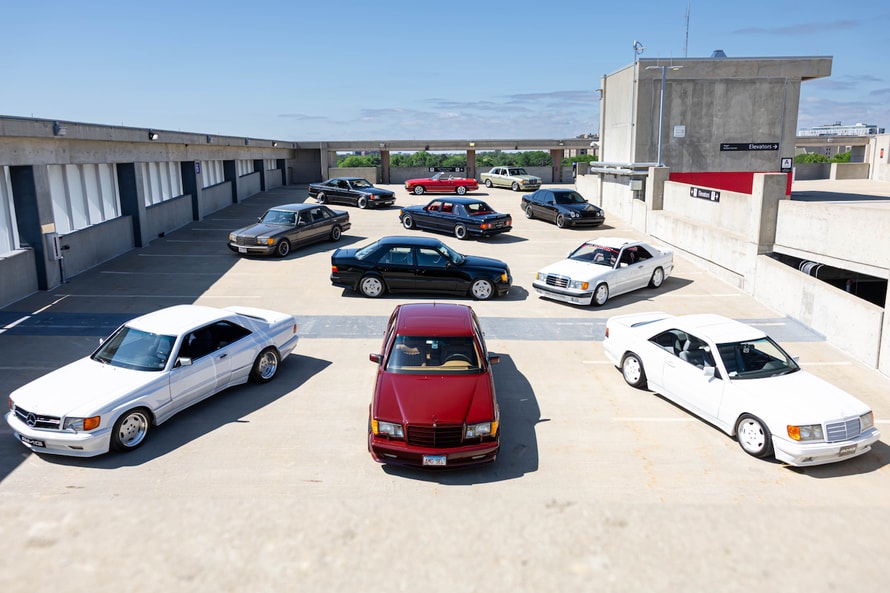
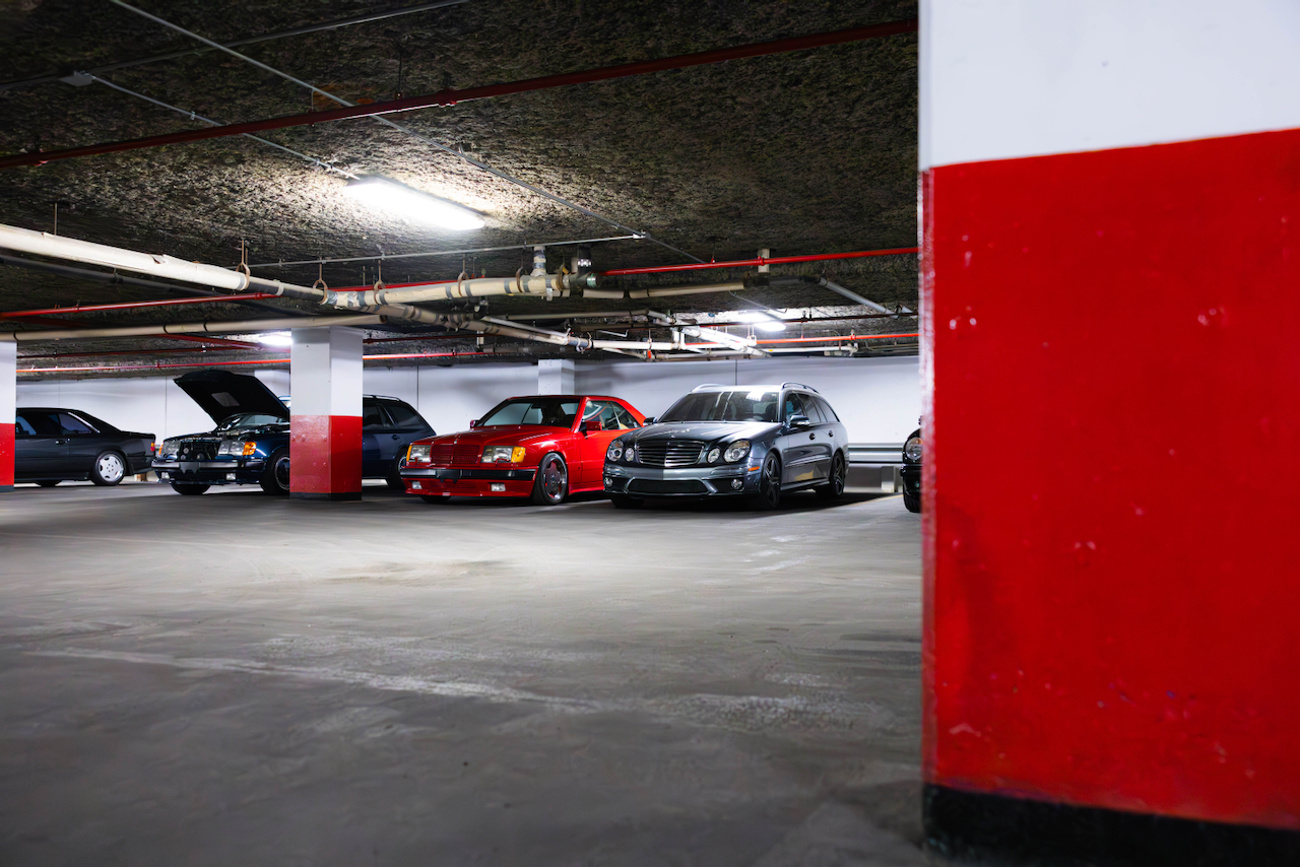
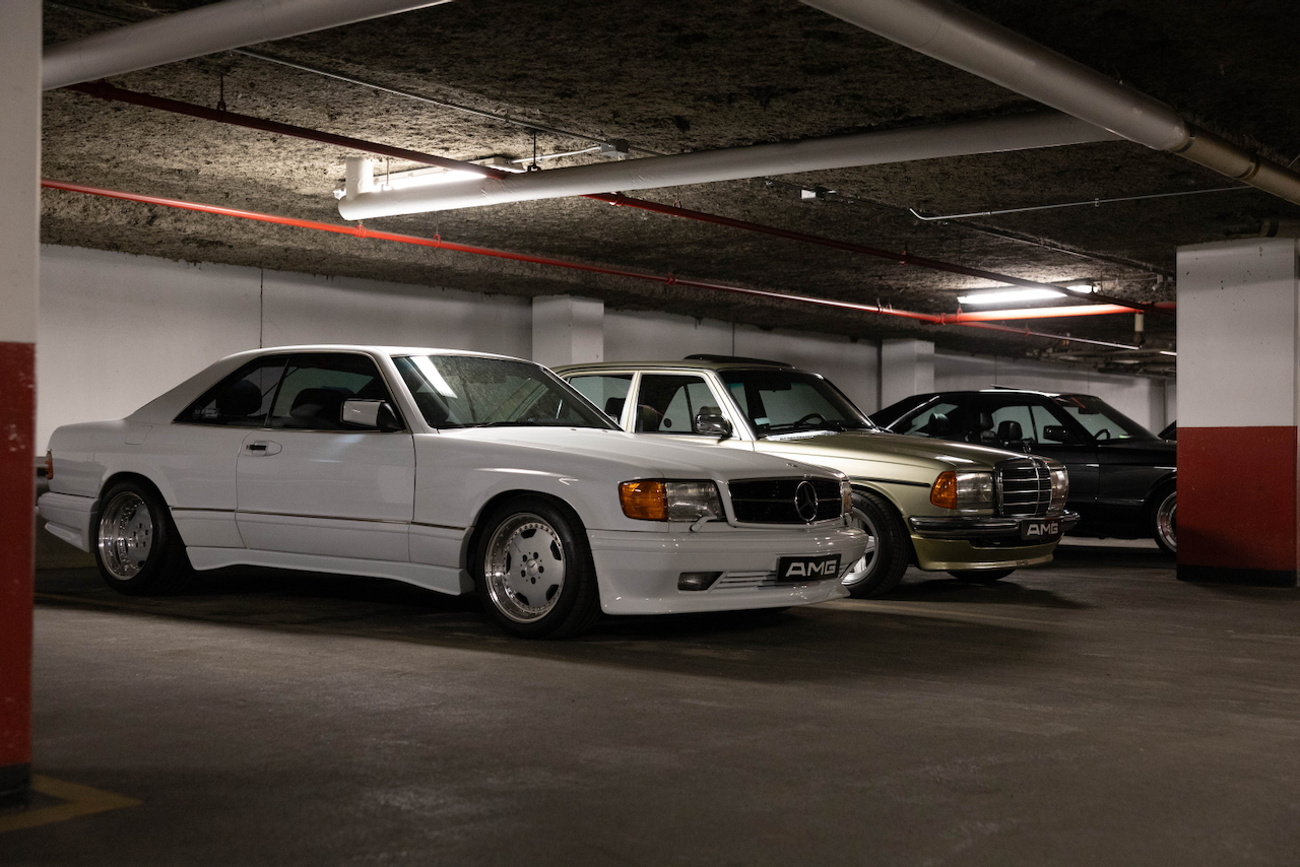
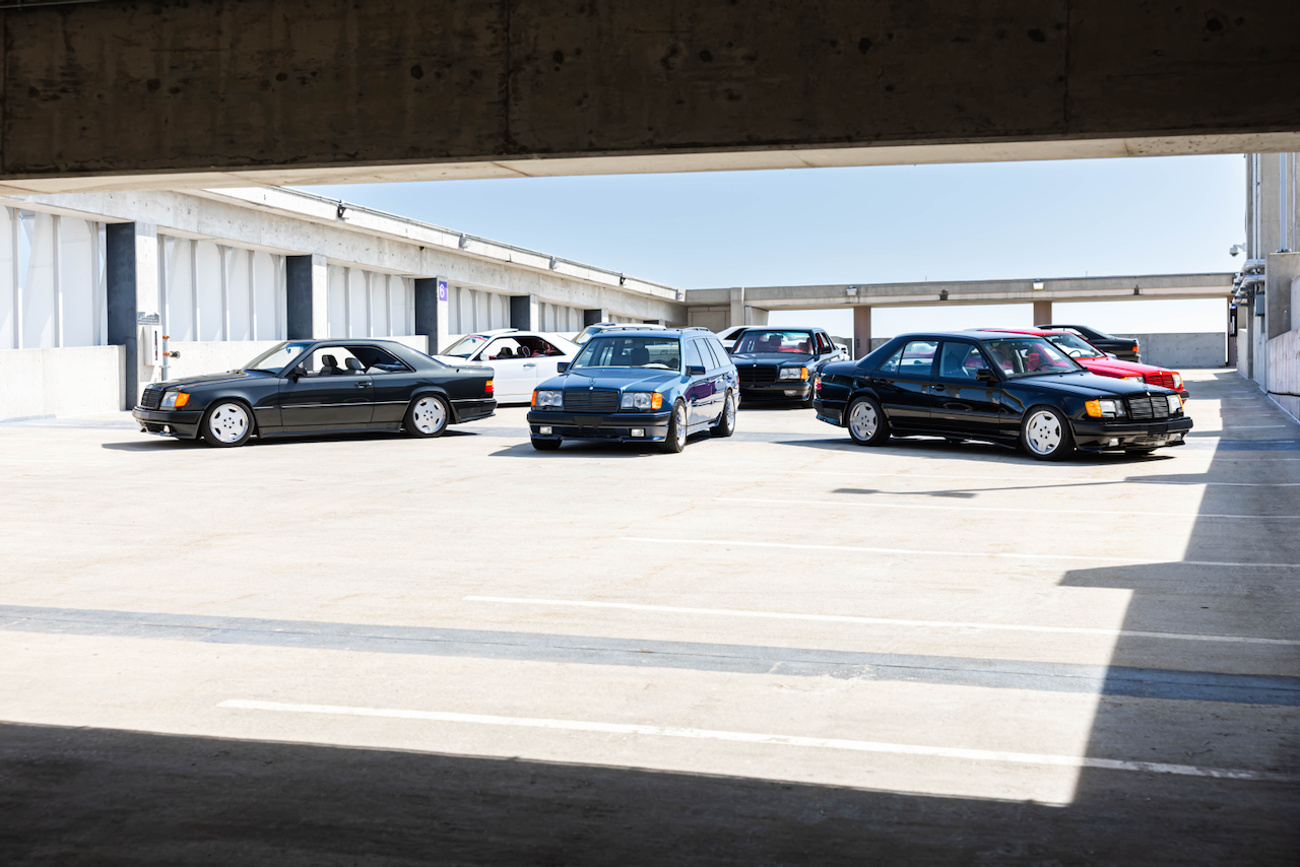
I was standing at the bow of Richard Buxbaum’s personally owned 6.0-liter W126 “Red Baron” – the car poised like a monochrome cardinal warship. Its jutting North American bumpers gave it a houndish underbite and added to its stretching length compared to the brutish W124 Hammers flanking it.
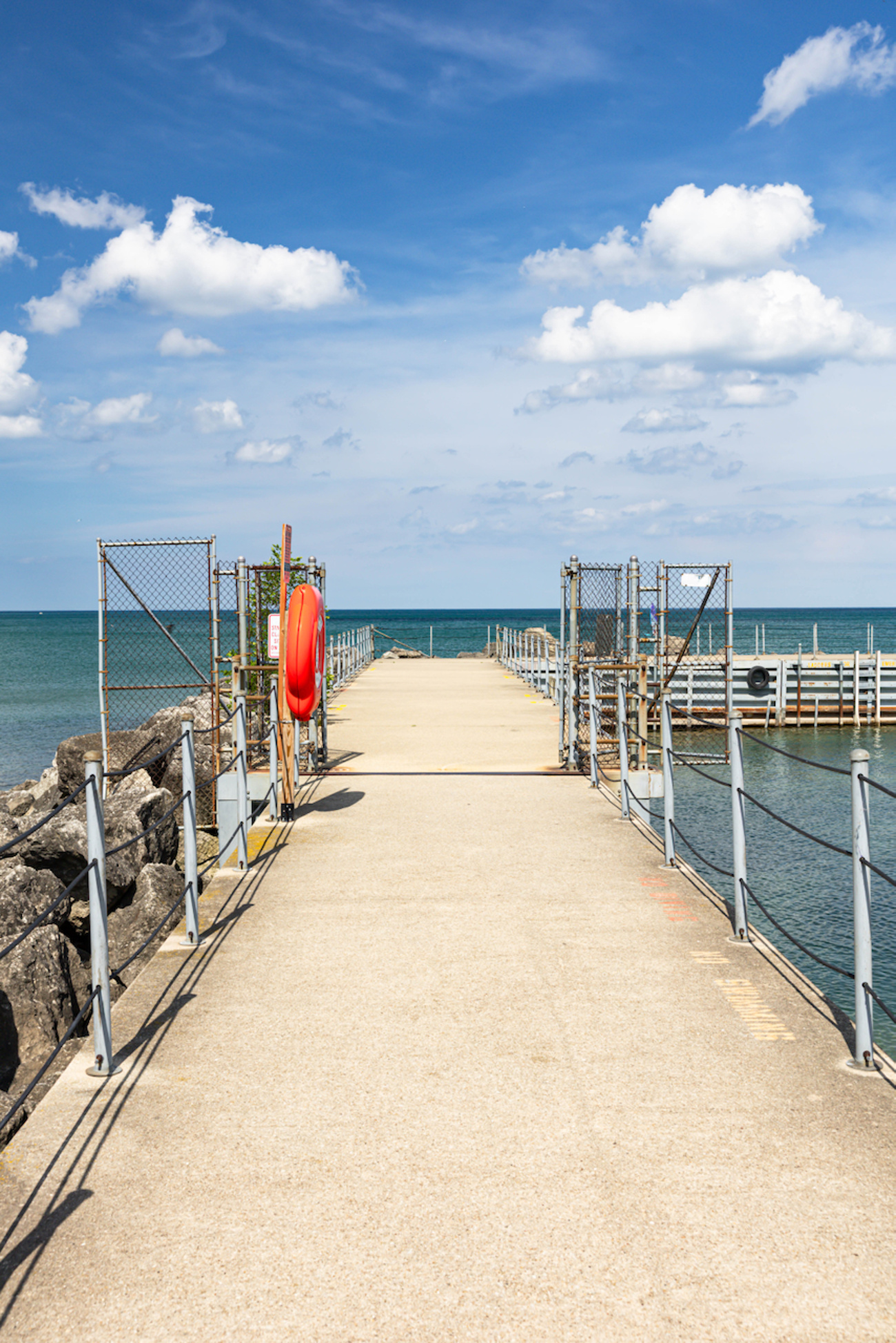
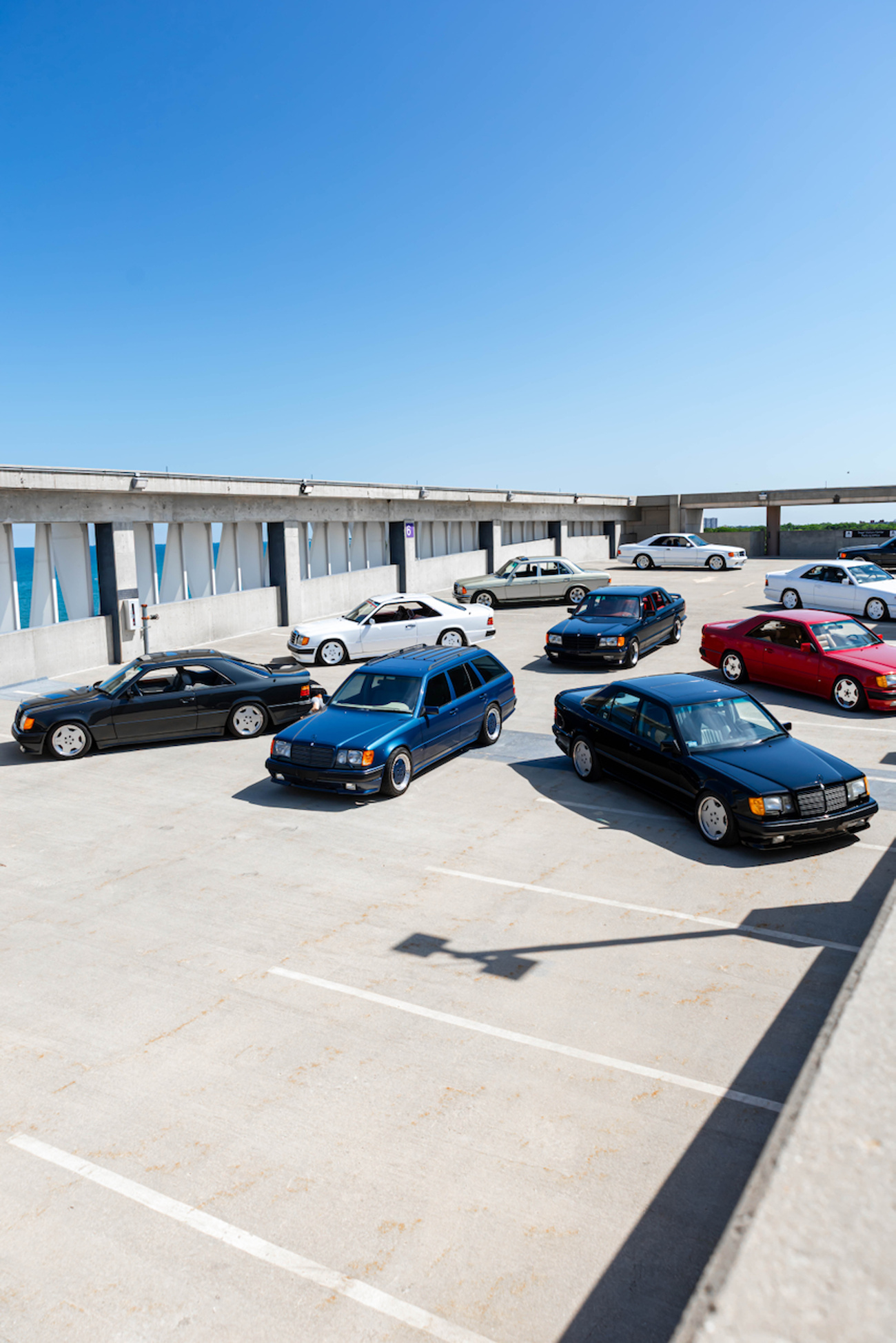
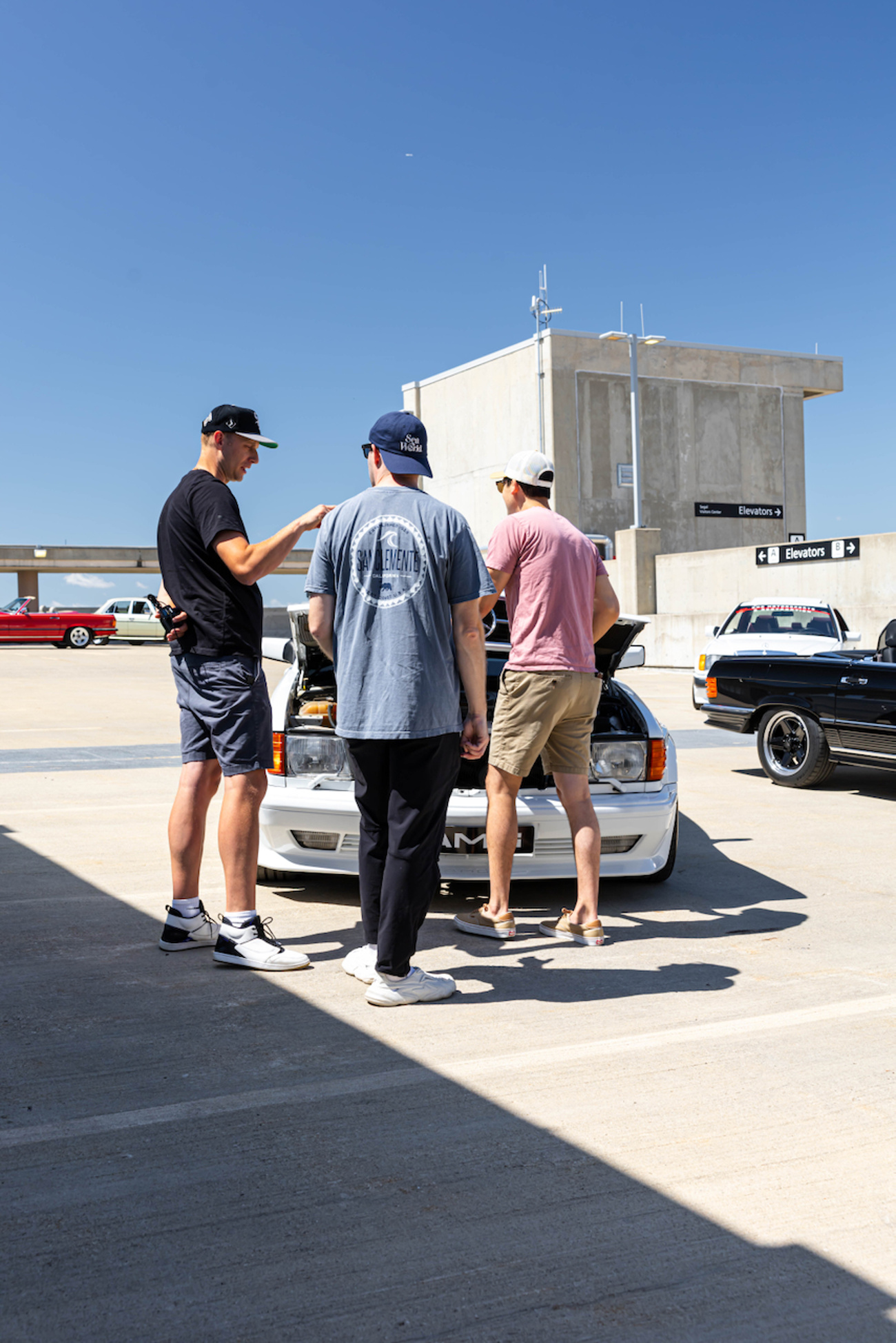
A cool gust rippled the sails of sloops skating on the blue waters of Lake Michigan and carved through the lineup of cars on the parking deck roof of the Segal Visitors Center. A double overhead cam M117 Hammer engine loped at a baleful cadence as it moved tighter in the lineup for a better picture. I was surrounded by the stewards, builders, historians, enthusiasts, and photographers who live and breathe pre-merger AMGs. I lowered my camera, paused for a breath, and soaked in the absurdity of it all. While it was just a photoset, this was an event that would be looked back at in twenty, hell – even thirty years as: “I can’t believe all of those cars were together at once.” There are moments in life that can glide by and abruptly end without you appreciating the absurdity of it in the moment. It’s a retrospectively horrifying thought to a sentimental person like me.
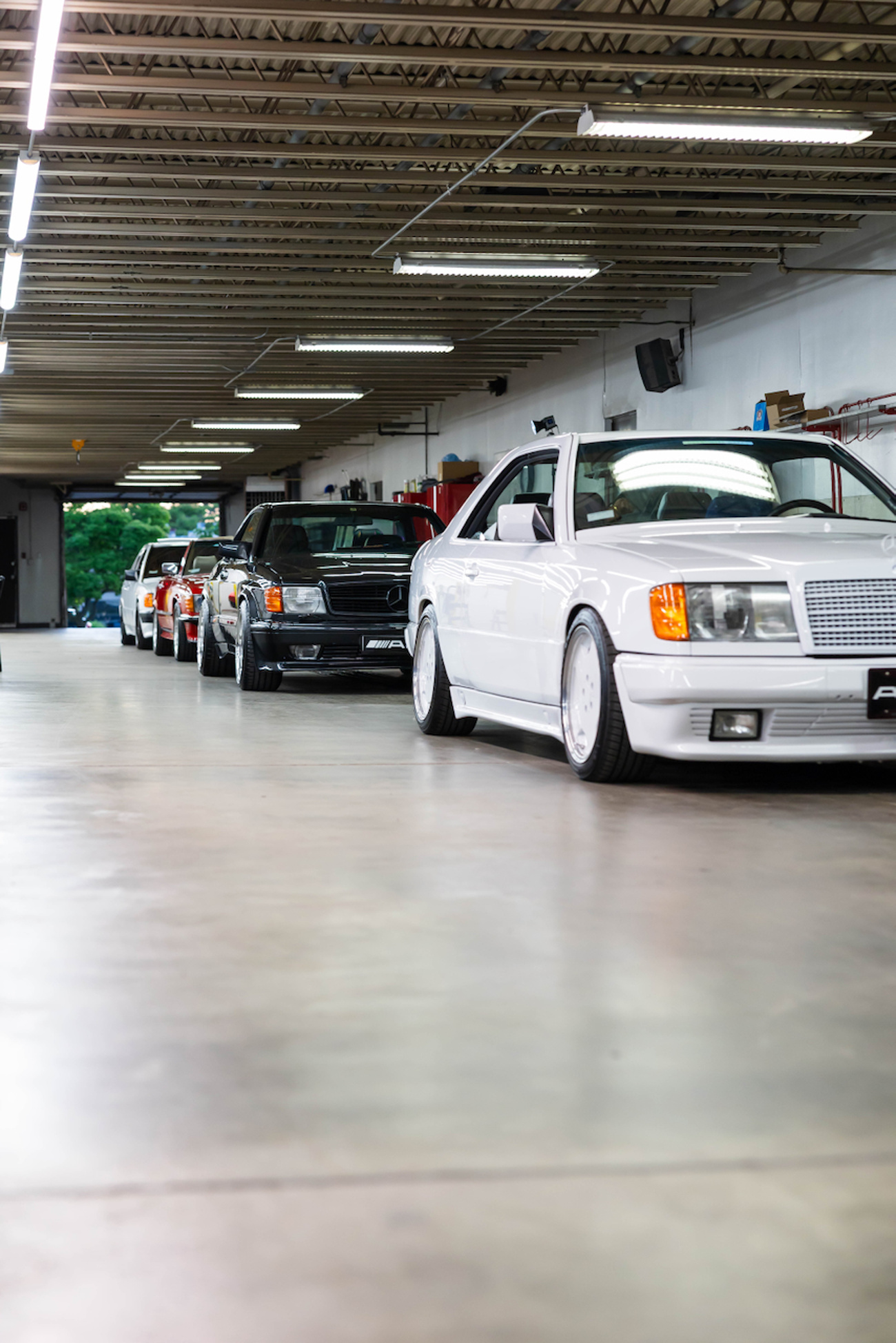
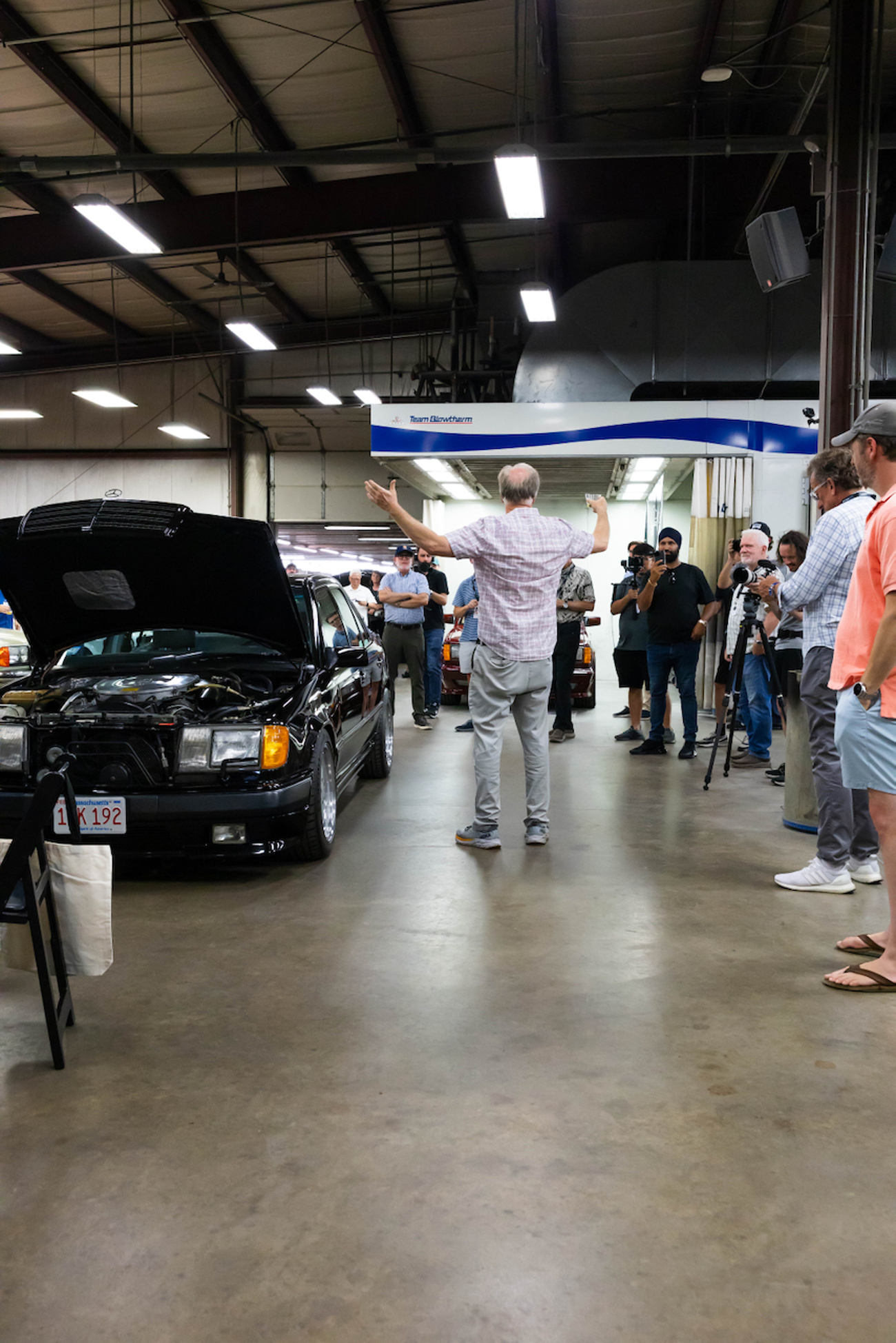
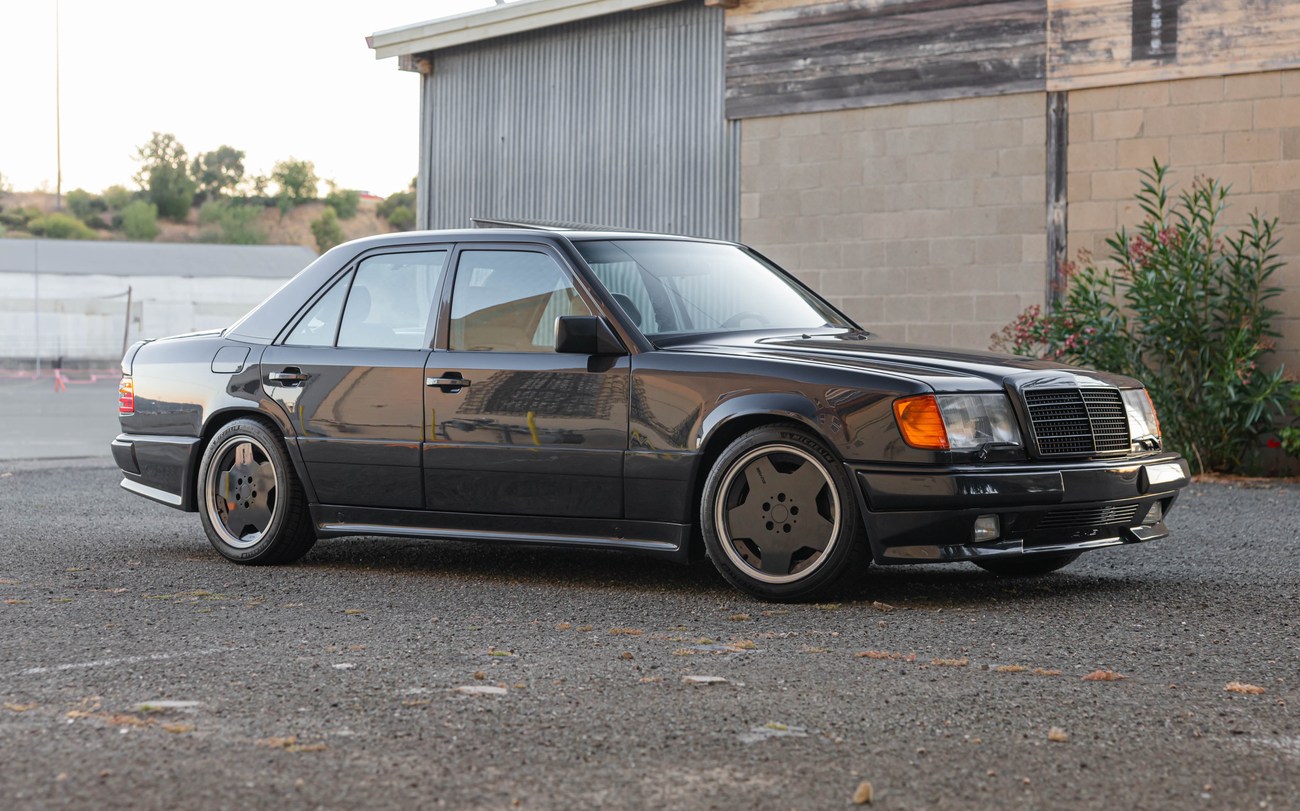
These events are important as they let the builders pollinate their stories and information onto younger generations. Pre-merger Mercedes-Benz are generational cars. Before Chrysler merged with Mercedes-Benz in the ‘90s, every single Mercedes-Benz was built to be the last car customers bought. Accountants and numbers didn’t take precedence over engineering back then, especially when it came to the AMG cars. The Hammers only existed because of the people who wrote monumental checks for them. You could not go into the dealership and pick out a Hammer or a W126 DOHC car from inventory – they were not pre-built and ordered by dealerships, or available off the shelf for passersby with fat bank accounts. You could do that with an F40 or Countach or XJ220. Not with a Hammer. You had to be in the know. You had to be consummately wealthy. You had to have the willpower to stroke a check for over half a million dollars (in today’s money) for a car most people would see as just an E-Class with bigger wheels. You then threw that check to Richard Buxbaum, figured out your spec, and waited until Hartmut Feyhl and crew spat out a car that could bury the speedo at 180 MPH with four adults comfortably.
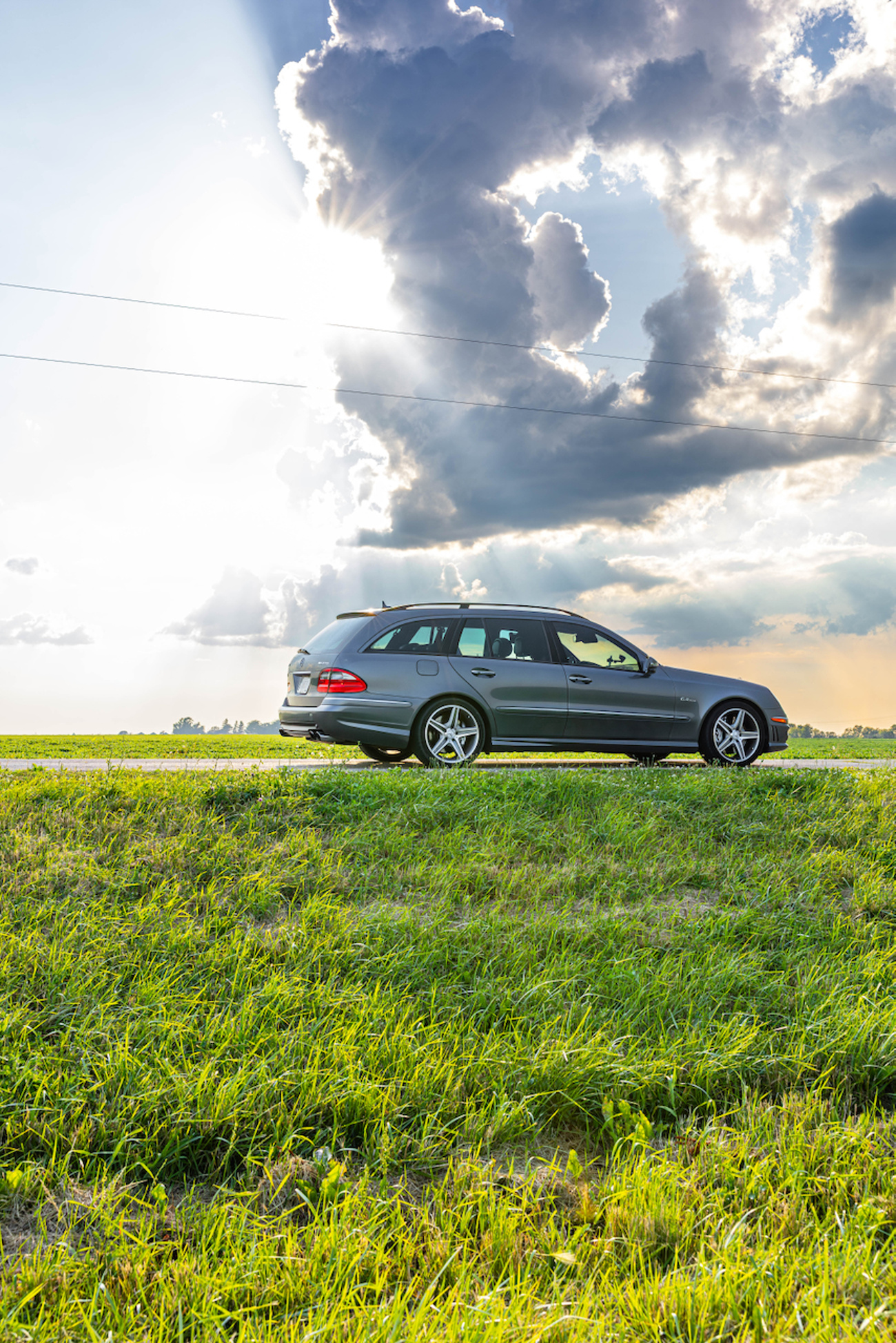
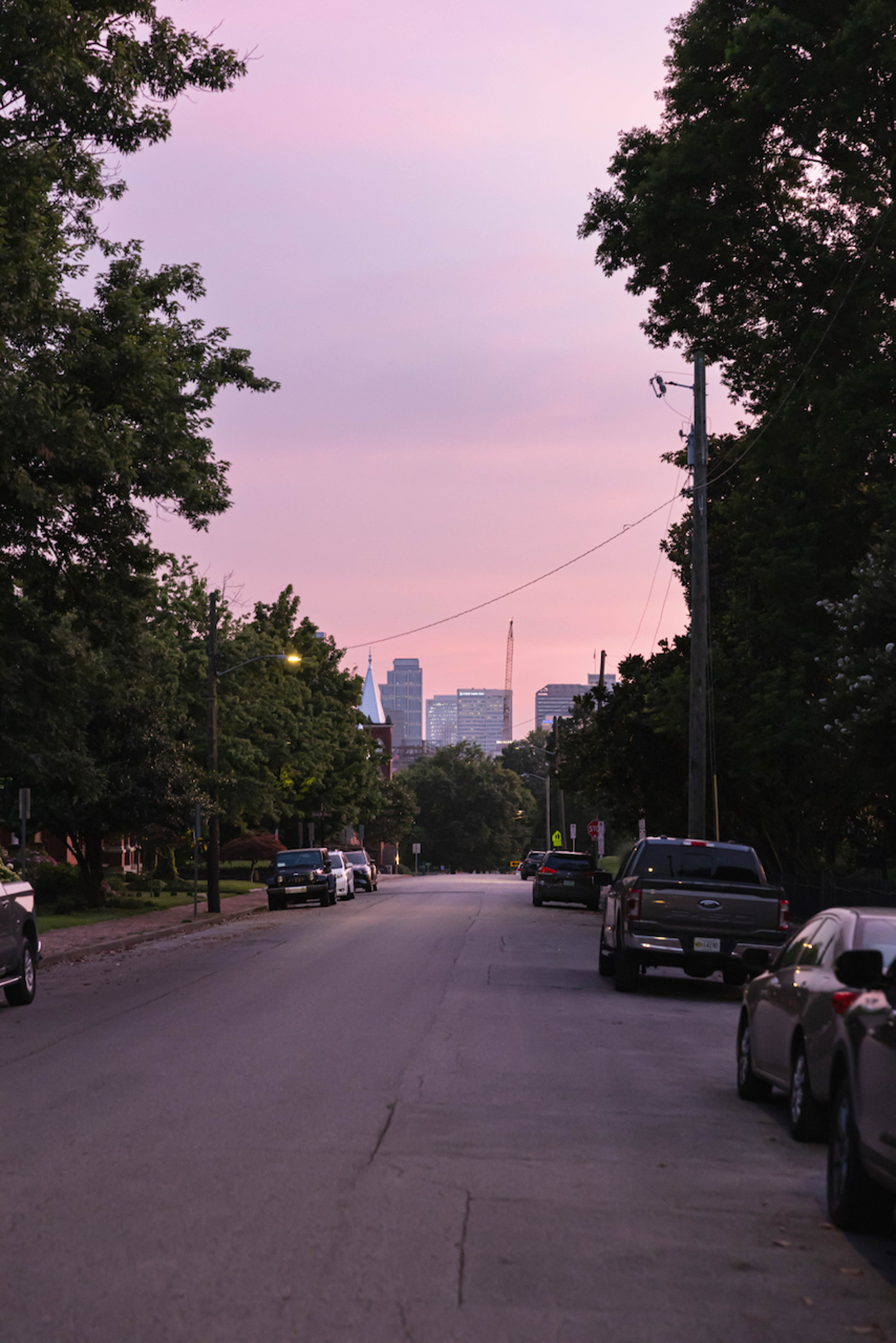
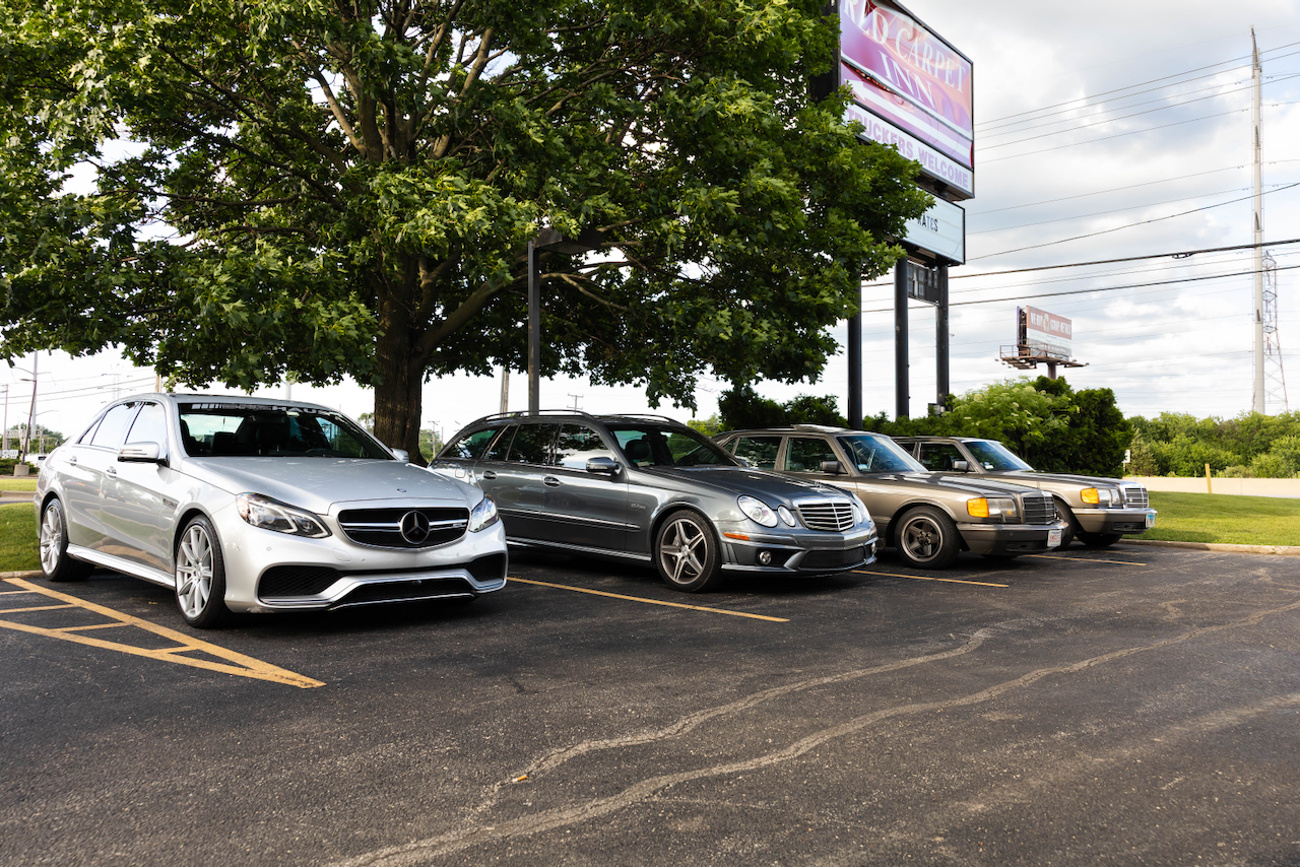
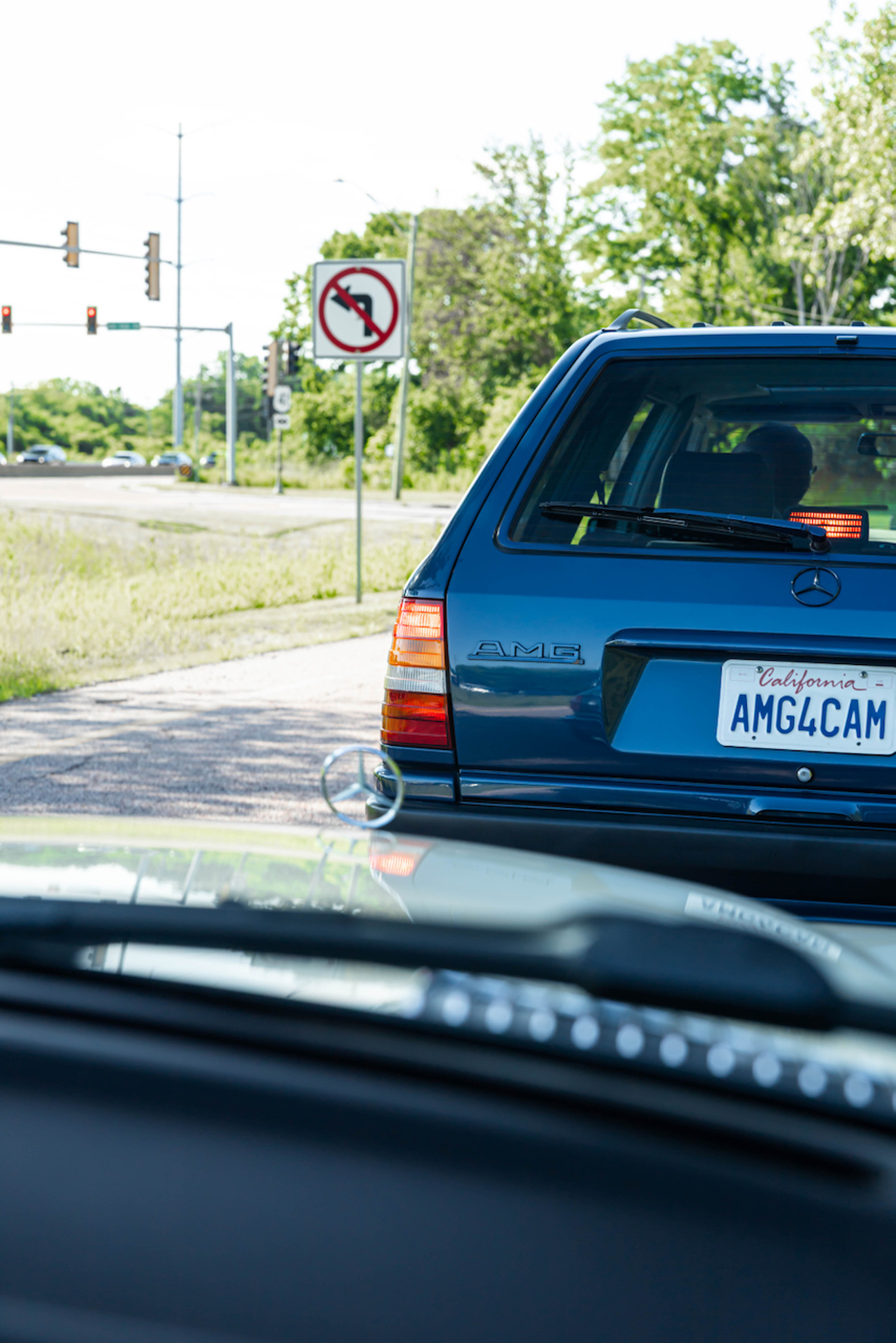
Atlanta to Chicago is an eleven hour drive and nearly 800 miles. It’s a mix of Appalachian foot hills that slowly blends into the vast flatness of the Midwest where the roads are straight and the sky is big. We loaded up my girlfriend’s 2007 Mercedes-Benz E63 AMG wagon with supplies for the weekend and bolted to Nashville as the first stop. It was 100 degrees even as the sun settled behind the treeline. One of the hottest recorded weeks for late June. A phalanx of hyperion cotton candy clouds stood guard behind the stiletto pack skyline of Nashville as we sat on the tailgate of the S211 and ate Jenni’s ice cream on the East End and watched the molten disc of sun squelch its acidic heat beyond the city and hills to the west. While we didn’t own a pre-merger AMG, the S211 AMG was accepted to the 233 West event with open arms. Like pre-merger cars, these E63 wagons, all 153 produced between ‘07 and ‘09, had to be custom ordered by paying customers through dealerships. It’s one of the few post-merger AMGs that replicate the rarity and exclusivity of the per-merger cars. There were not a lot of people who wanted or had the means to buy a 507 horsepower station wagon, especially as the Recession loomed. It was a grotesque display of excess and participated in a dyadic relationship with pre-merger AMGs.
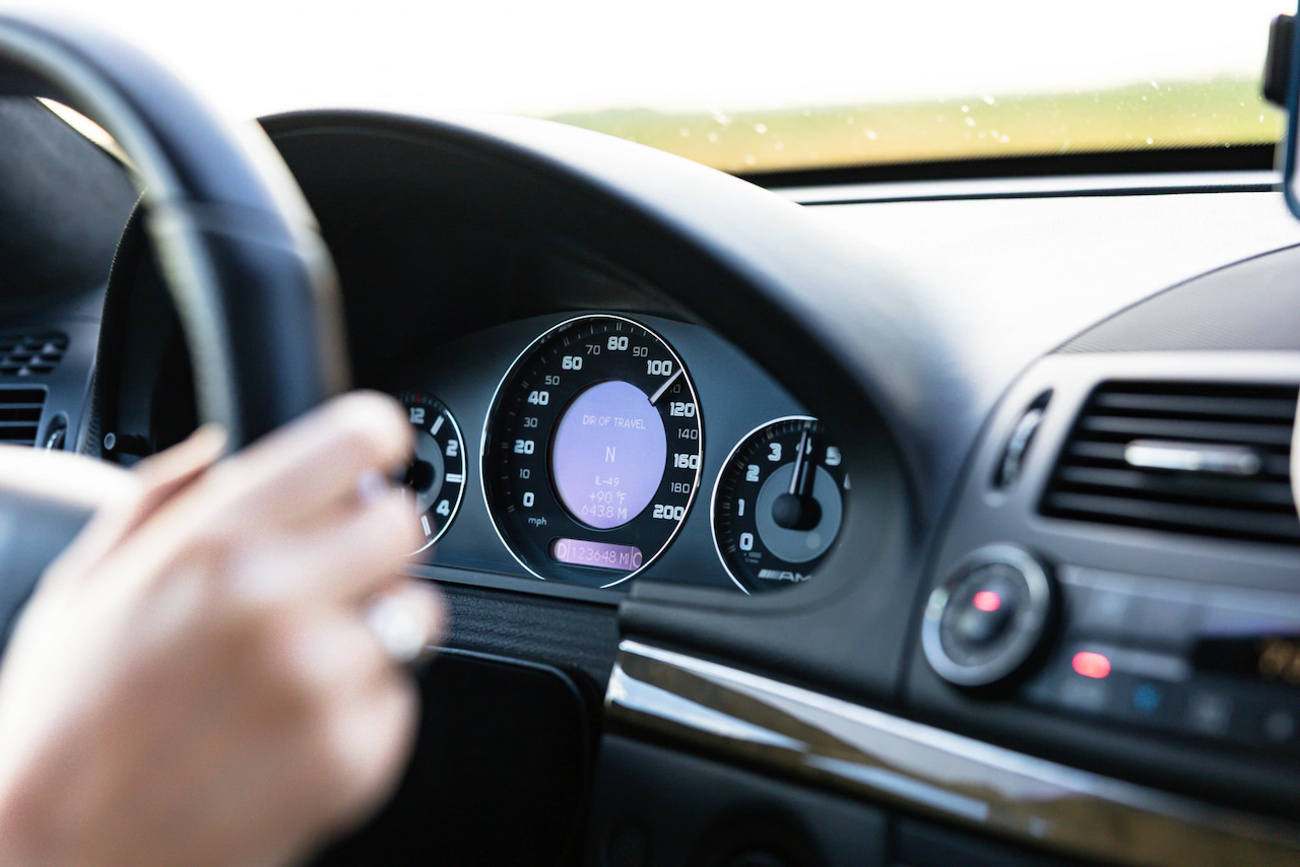
The road to Chicago through Indiana was like driving a Tomy Turnin’ Turbo toy from the ‘80s – endlessly straight roads with not a lot of steering. Fast cars of the Midwest in the ‘80s were Camaros and Corvettes. Fast cars of the Midwest today are still Camaros and Corvettes. We imagined us in the E63 being the Westmont crew breaking in 6.0 engines south of the city, terrorizing the successful farmers in their new C4s that barely broke the 150 MPH mark with hot rodded family sedans. Breaking off the interstate and rushing towards the cornfields, we pressed towards the city on unmarked two lane country roads. Corn standing 10 feet tall on either side magnified the sensation of speed like running down a hotel hallway as a kid. Hot summer clouds formed like mesas in the sky. Sentinel marble white windmills rooted themselves into the farmland and metronomically churned the humid air. We surprised a few muscle cars who mistook us as a 20 year old E-Class and couldn’t possibly understand the concept of our electronically limited 186-mph station wagon. The hand built M156 engine has incredibly long legs and reigns king in regions like this. I’ve always said these engines pull like a LS7 that went to private school. Why this engine exists in a station wagon is why I love the brand and is the true production successor to Jonathan Hodgman’s 1 of 1 AMG Hammer wagon, which was on a truck, racing us towards the Windy City.
Chicago always appears on the horizon suddenly and dramatically. The Willis Tower knifed upwards, piercing the blue sky. Kollin, the 233 West organizer, had an entire hotel booked for the attendees in the Evanston Lakeshore Historic District of North Chicago. Deep seated brick homes that represented turn of the century styles of Georgian and Tudor revival were the backdrop to the thrum of M117 powered cars that trickled in and stationed themselves before the hotel where an otherworldly congregation of pre-merger talent were to rendezvous. We joked that if the hotel were to catch fire, the world would lose basically all of its North American Hammer knowledge akin to the burning of the Library of Alexandria. Stephen Duncan-Peters of Curated met me at the curb as I got out of the wagon to stretch and we immediately went into lifter bucket seals and head bolt discourse on M156 engines since he also has a E63 AMG wagon. I knew then and there I was at the right place with the right people and we could hold full conversations by using engine and chassis codes and it not be weird. These were my people.
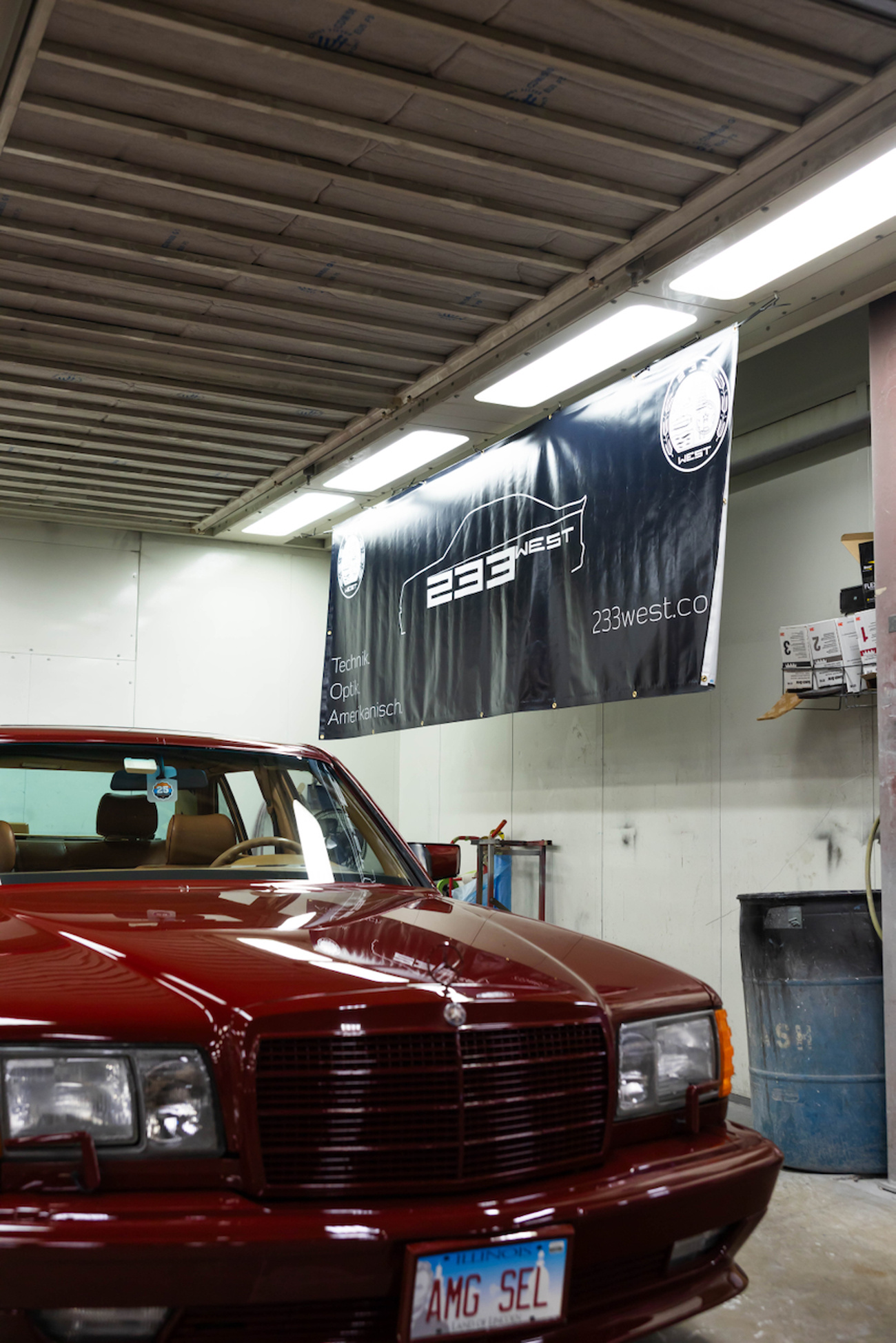
An introductory get-together was hosted at The Last Detail, an all-in-one restoration, mechanical, paint, detail, storage, and boutique auto sales facility helmed by Tom Snellback who had been in the business since the ‘70s. A Linden Green ‘57 Mercedes-Benz 300SL Roadster greeted us at the front door along with a beautiful yellow W108 and a W124 E60 all stationed next to picnic tables of shockingly good catered Mexican food. The 233 West event was a tightly curated group of people. A lot of us knew each other and mingled in familiar groups. I greeted the people I knew and started to hunt down people I didn’t to begin information extraction and to sponge up new knowledge. This was such an incredible moment in pre-merger history and time was to not be wasted.
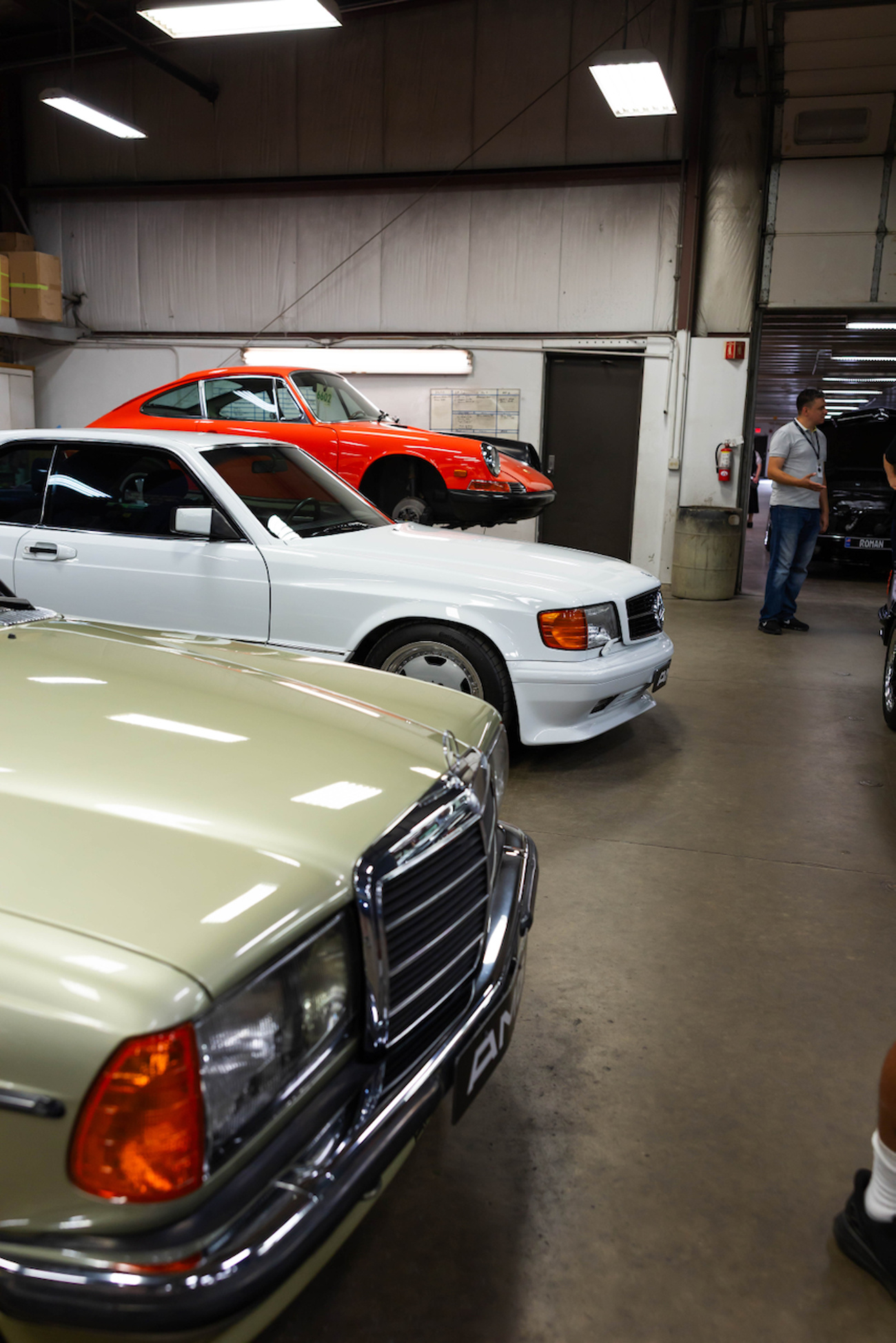
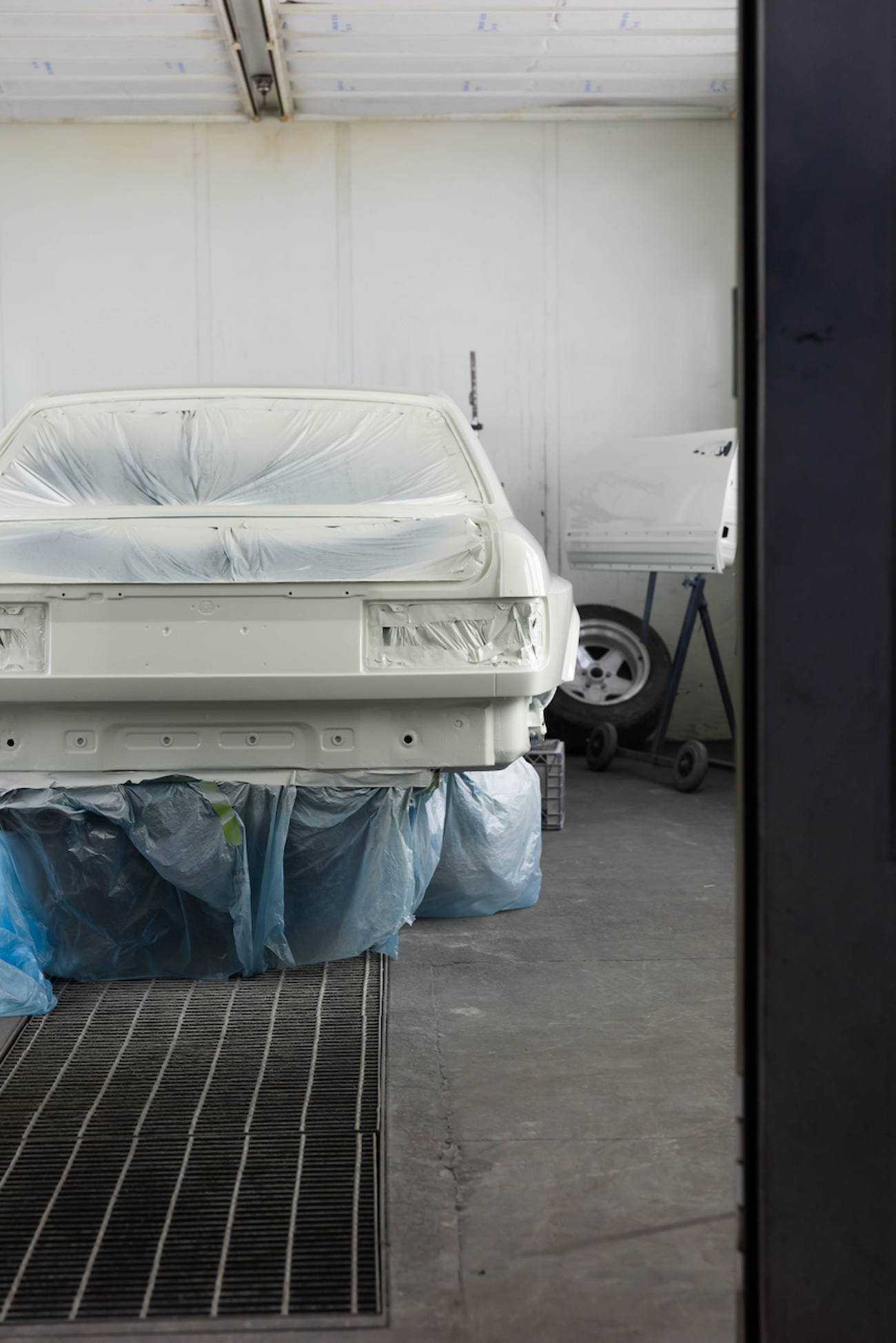
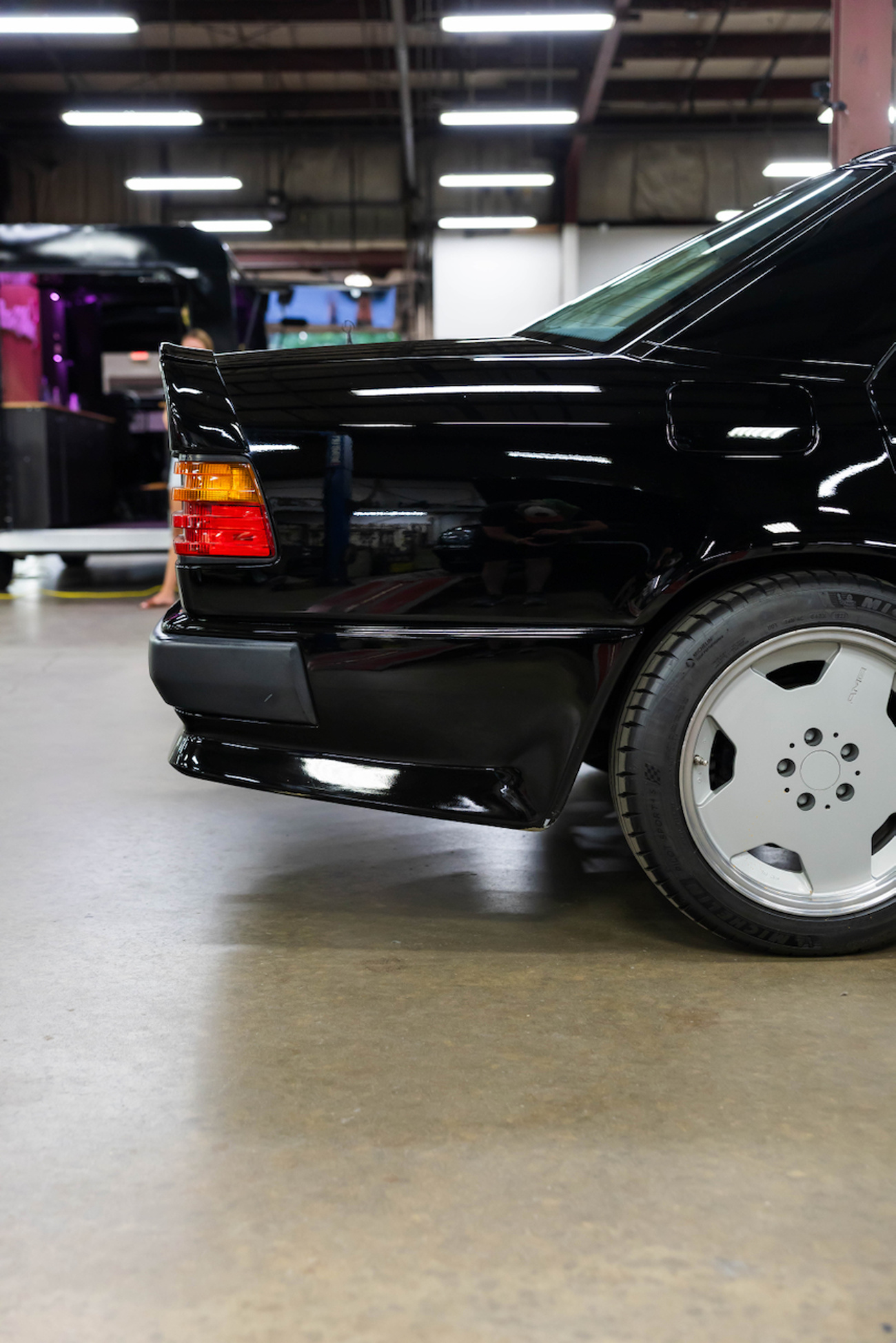
The Last Detail is a huge facility. Packards and Rolls-Royce were tucked away in corners, pre-merger AMGs were stuffed in the hallways and rolled onto lifts, and I spotted a widebody C126 in a paintbooth getting a new outfit of 737 sprayed onto its box metal fenders. Richard Buxbaum’s W126 sat perpendicular to Blakley Leonard’s Japanese 560SEC AMG Widebody and his Thistle Green over Olive Green cloth ‘84 280E I fought for on The MB Market in a bidding war – but lost. Jeff Wong’s W210 E60 AMG was another spectacular car complete with a 6.0-liter M119 engine and no sunroof. It immediately turned my brain into soup as he graciously showed me around it. A line of pre-merge AMGs were staged up like traffic inside the complex, most complete with Recaros, M38 or Italvolante steering wheels, genuine body kits, HWA wheels, and hot engines. I didn’t know where to start.
So I hit up the taco bar.
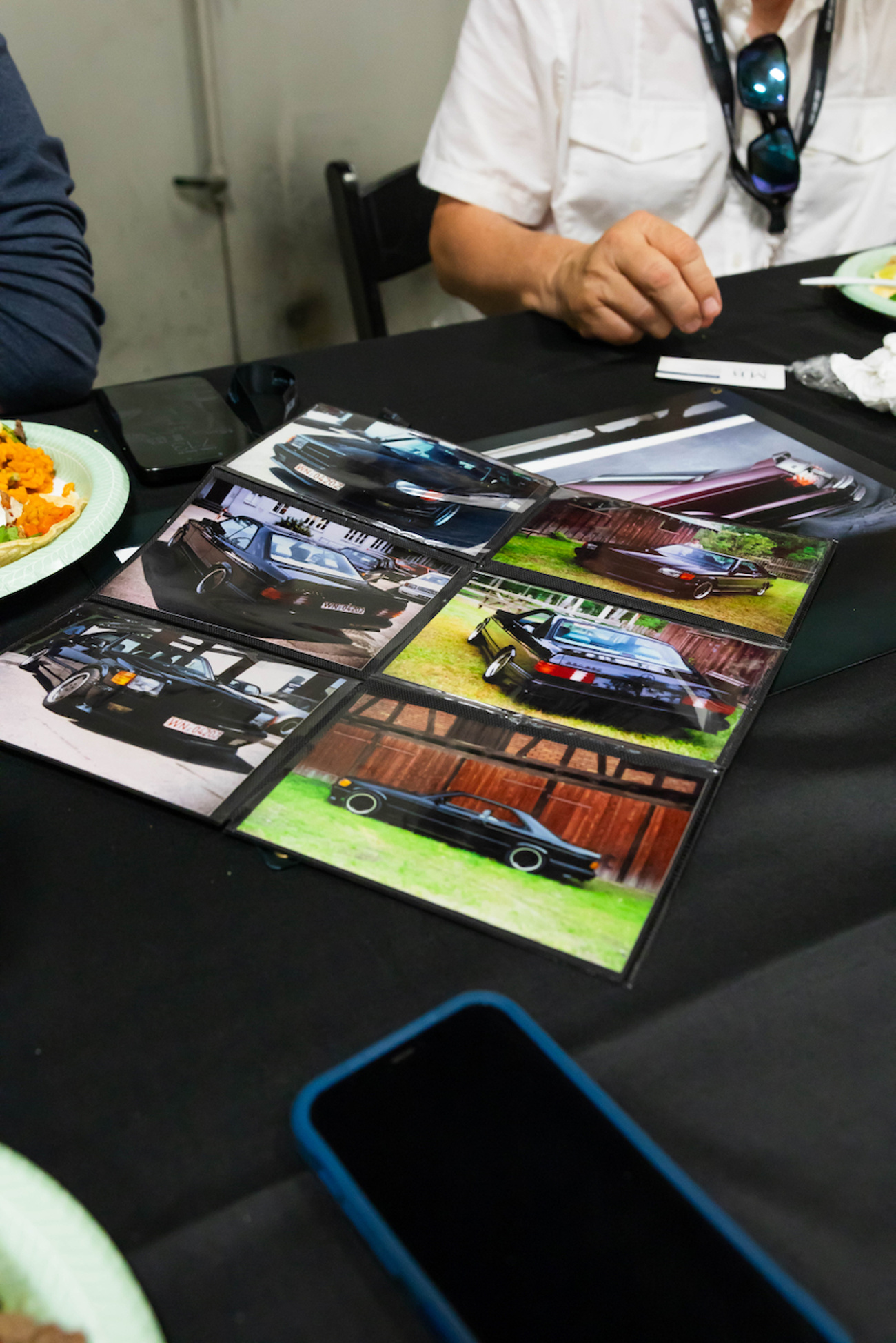
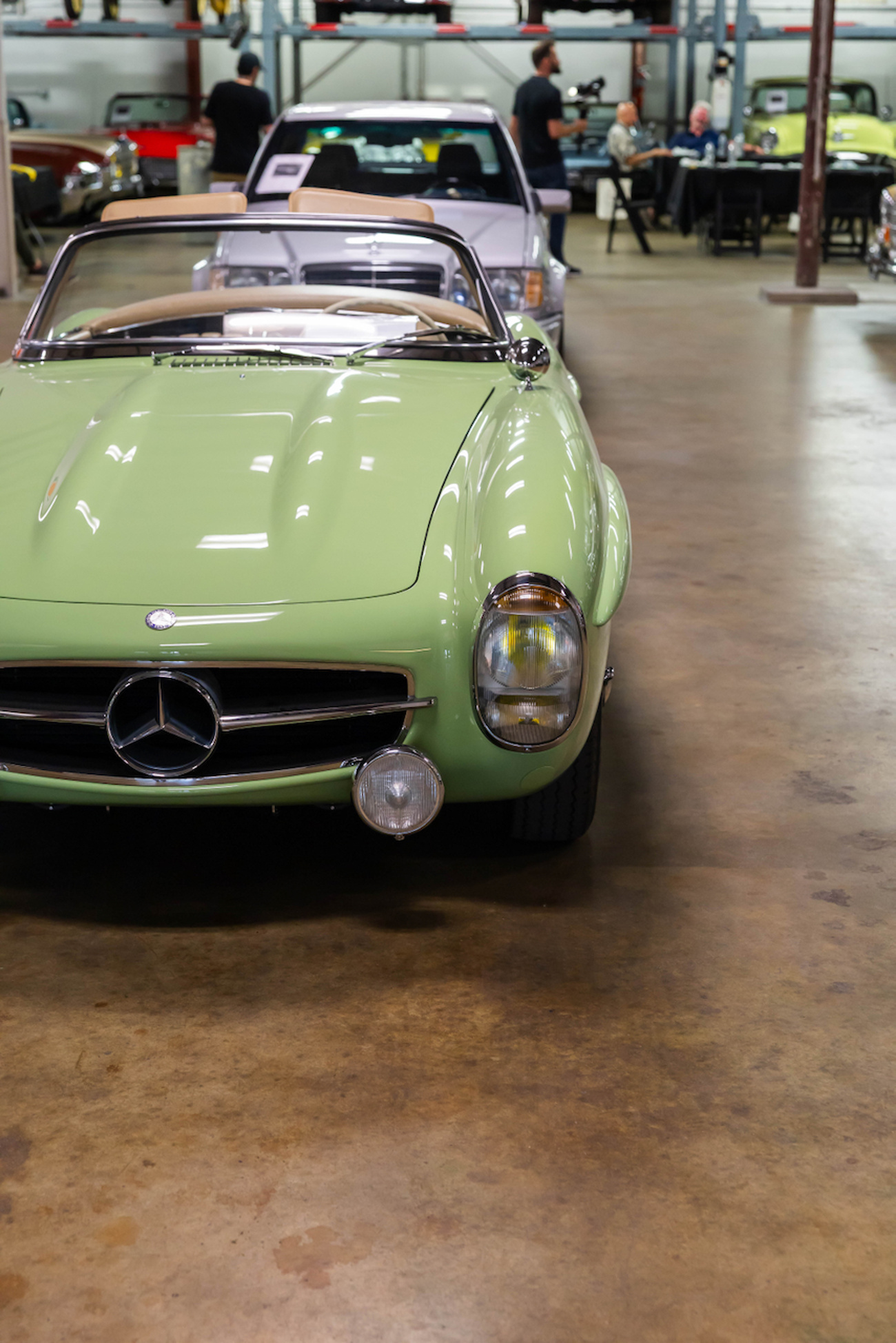
I was shoulder to shoulder with a lot of guys who worked at the Westmont shop in 1987. Parts managers, sales guys, EPA testing agents, shop foreman, mechanics, the whole lot. Edwin, who drove his 6.0-liter W126 from Boston to the show, and I loaded our plates with guacamole as we talked about his journey as we were the two guys who drove the furthest in our AMGs. Most of the cars were shipped from around the country to be here, but we used ours as intended. With a plate of beans, guacamole, tortillas, and carnitas, I was reminded of the Anthony Bourdain quote: “You learn a lot about someone when you share a meal together.” Our table was talking about the added structures on the rear subframe of Hammers and I was eavesdropping on the table behind who discussed Gleason differentials in their cars and which rear end ratios were better. An unassuming gentleman named Brian out of Wisconsin sat next to my girlfriend and I to chat. He pulled out a sachet of printed photographs and set them on the table and gauged our responses by leaning back in his chair and crossing his arms. I saw a red 450SL with a full AMG kit he bought new from Richard Buxbaum and a Gemballa 930 Turbo Version II he also bought when new. His stories of these cars from decades ago were amazing. He was good friends with Buxbaum and would sit down with him to option out and build his AMGs back in the ‘80s. That’s the way you had to do it back then – everything was custom, boutique, and one-off.
This is the reason these cars are so special. It’s the opposite of the German corporatism facade the regular production cars put off. These are pedestrian vehicles that are then hotrodded by German rednecks and made faster than a Testarossa.
Aaron, the owner of the black Hammer sedan that attended the event, and I were mesmerised by Brian and his stories. A lot of people who were at the event were younger and were not around when they were new. But people like Brian were well established collectors in-period and had the equity to order these cars from Buxmaum. He recalled watching Senna racing at Monaco and sitting next to Uwe Gemballa on the same balcony chatting about women, cars, and how to make cars go faster.
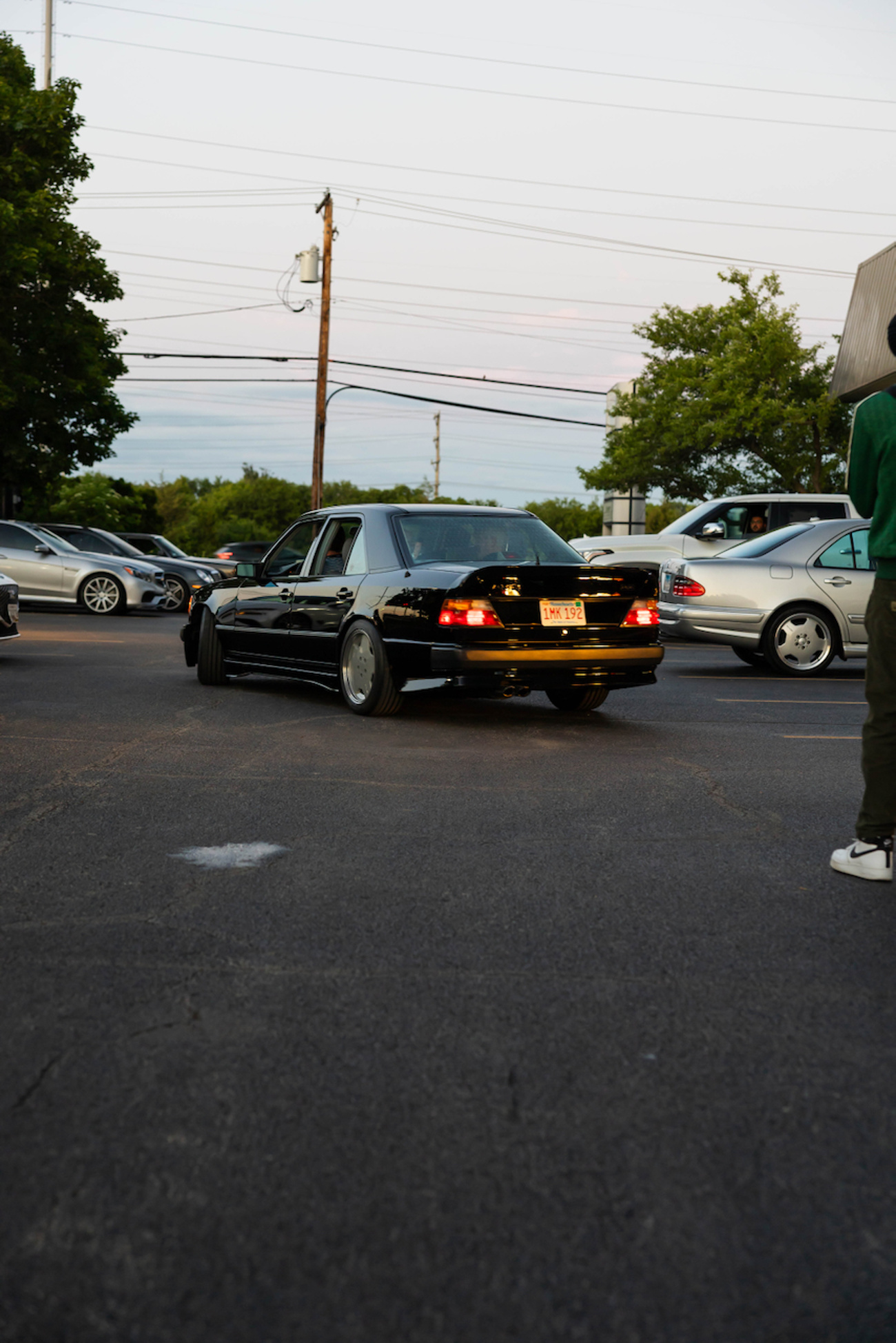
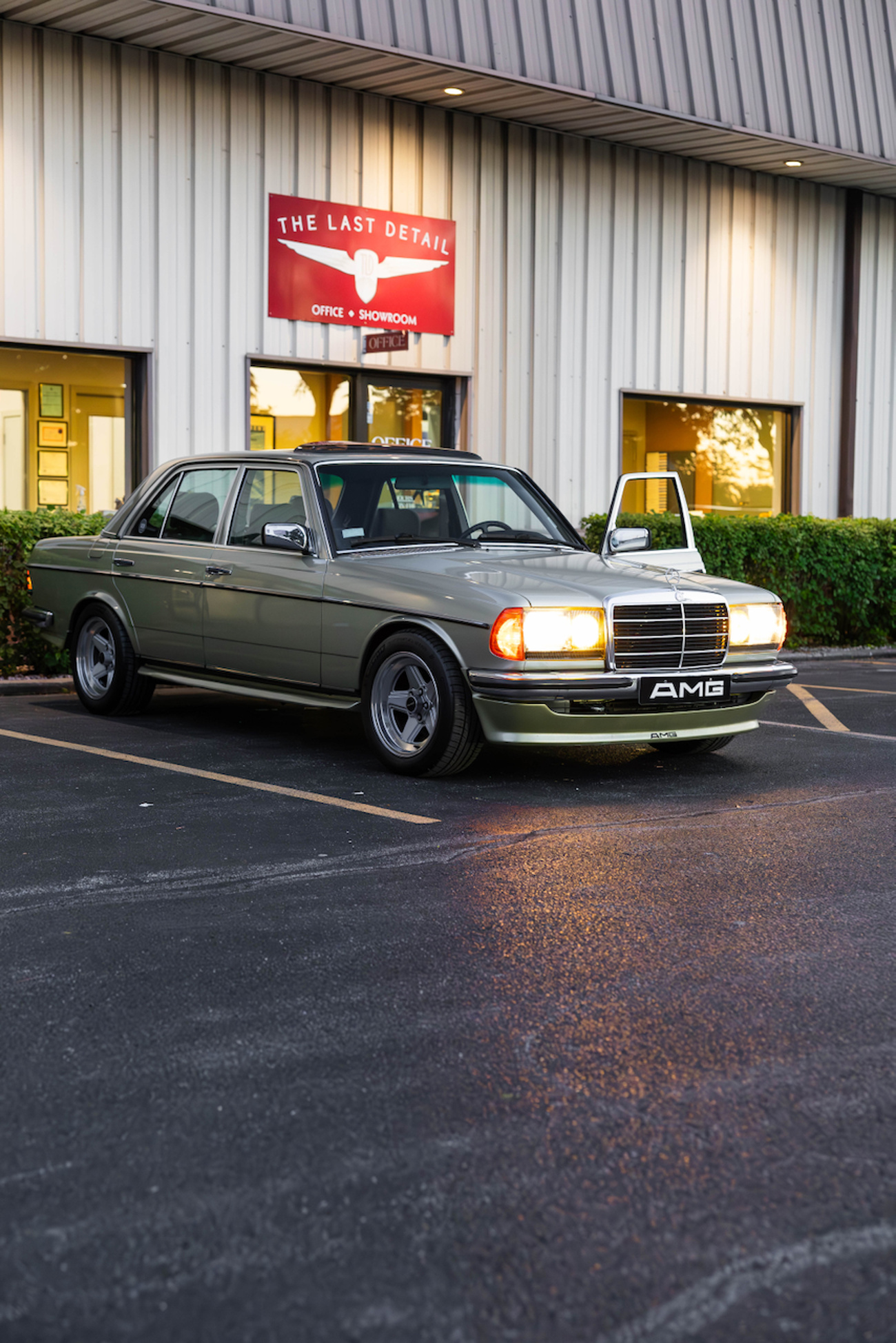
As twilight approached, cars and people slowly began to roll out back to the hotel. Mustangs, Mopar, and VQ powered hoonigans could be heard blasting down the street and a few pre-merger AMGs allegedly chased them down throughout the night as specters of the past – noisy quad-cammed poltergeists that ravaged and humbled the current dwellers of Chicago. It was the witching hour and they haunted the streets once more.
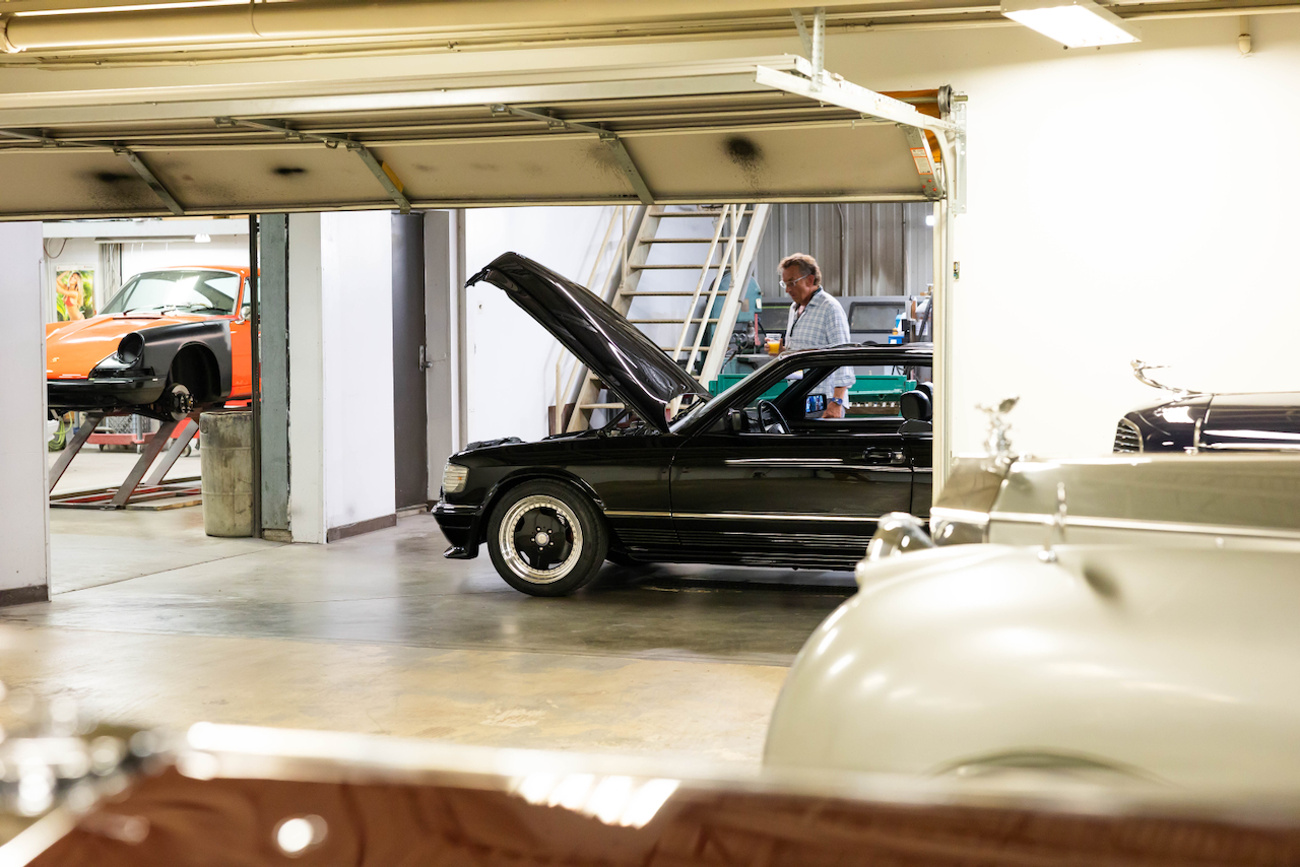
We stumbled back to the hotel in a stupor as we were overwhelmed by information, stories, and of course… tacos. The original builder of the Hammers, Hartmut Feyhl, was checking in late. A few of his old colleagues greeted him as “Harty” having not seen each other in a while. The downstairs speakeasy style bar was packed with our group discussing Pentas and Aero 1 wheels and crankshaft differences. Jonathan Hodgman, arguably the most skilled contemporary expert on DOHC M117 cars in the world, and owner of two of the Hammers in attendance stood on the fringe in his flip flops while confirming that 3 Hammers would be delivered from his shop the following morning in time for the shoot, stood behind Hartmut in his flip flops in a daze and said his two Hammers were stuck on a truck in transit somewhere in the middle of the country. Ben Everest, one of the founders of The MB Market, was on the phone with Blakley Leonard, his cohort, trying to figure out how far away his Uber was from the hotel as he had been stuck at the airport for about 14 hours. We went up to the room when he arrived at around 11:00 PM to categorize our thoughts while we edited pictures and got a game plan for tomorrow which was to be one of the wildest photosets I’ve ever witnessed.
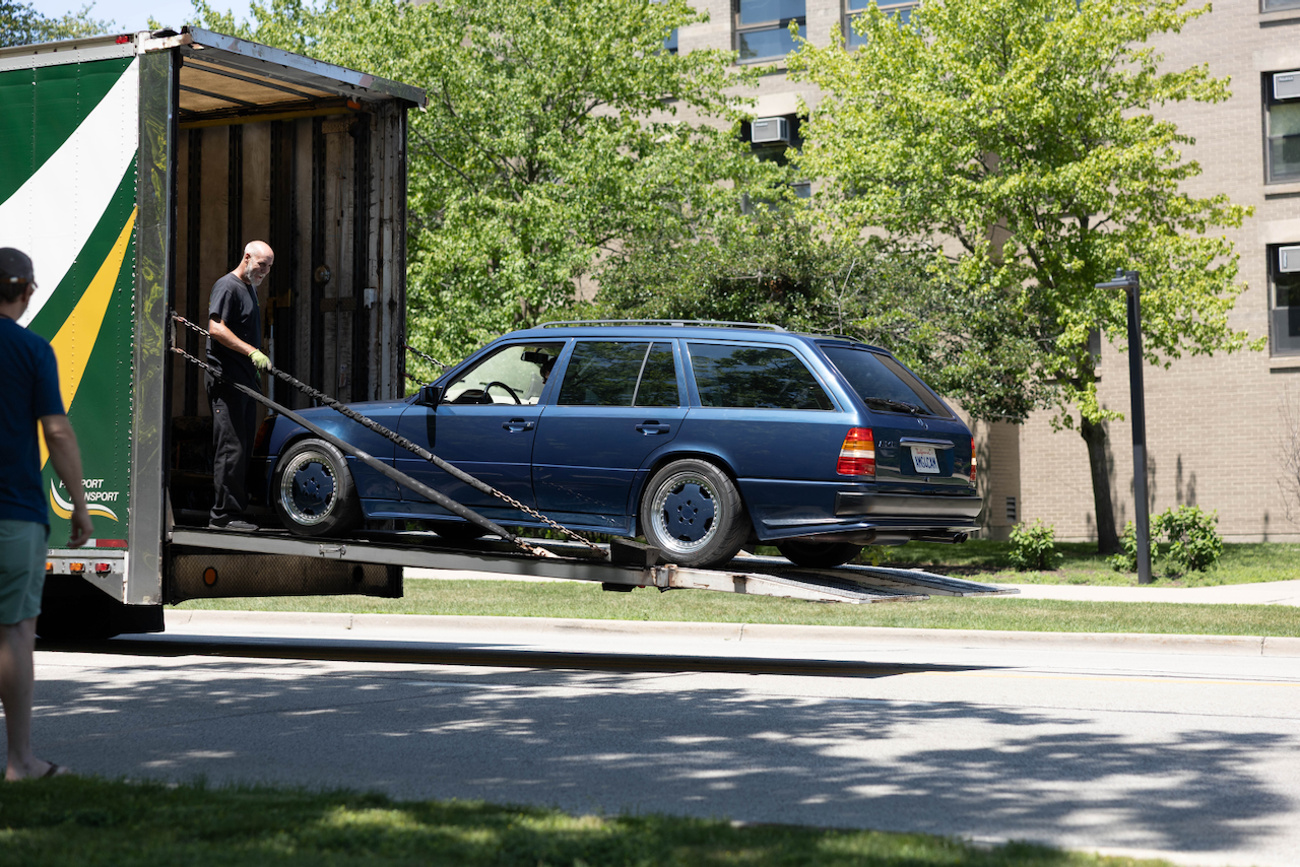
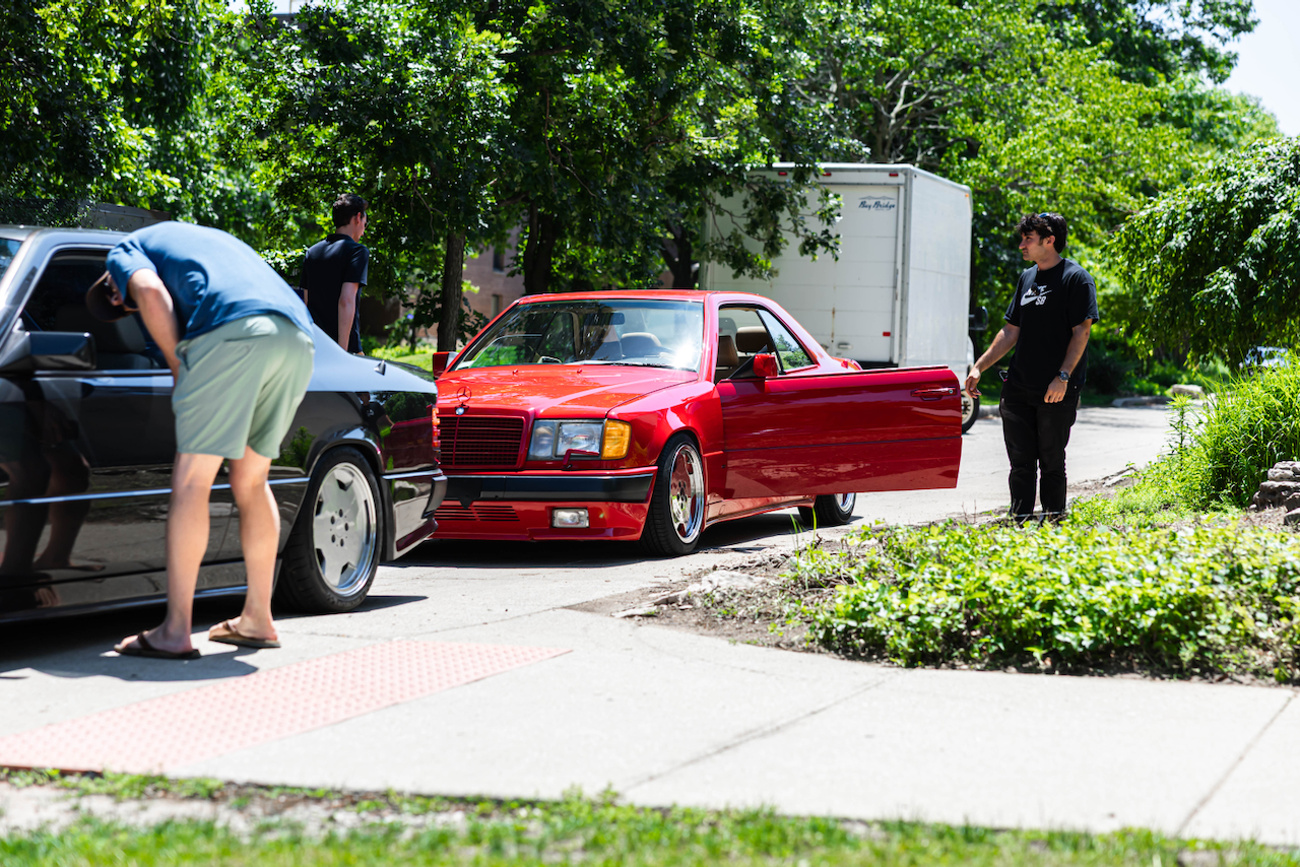
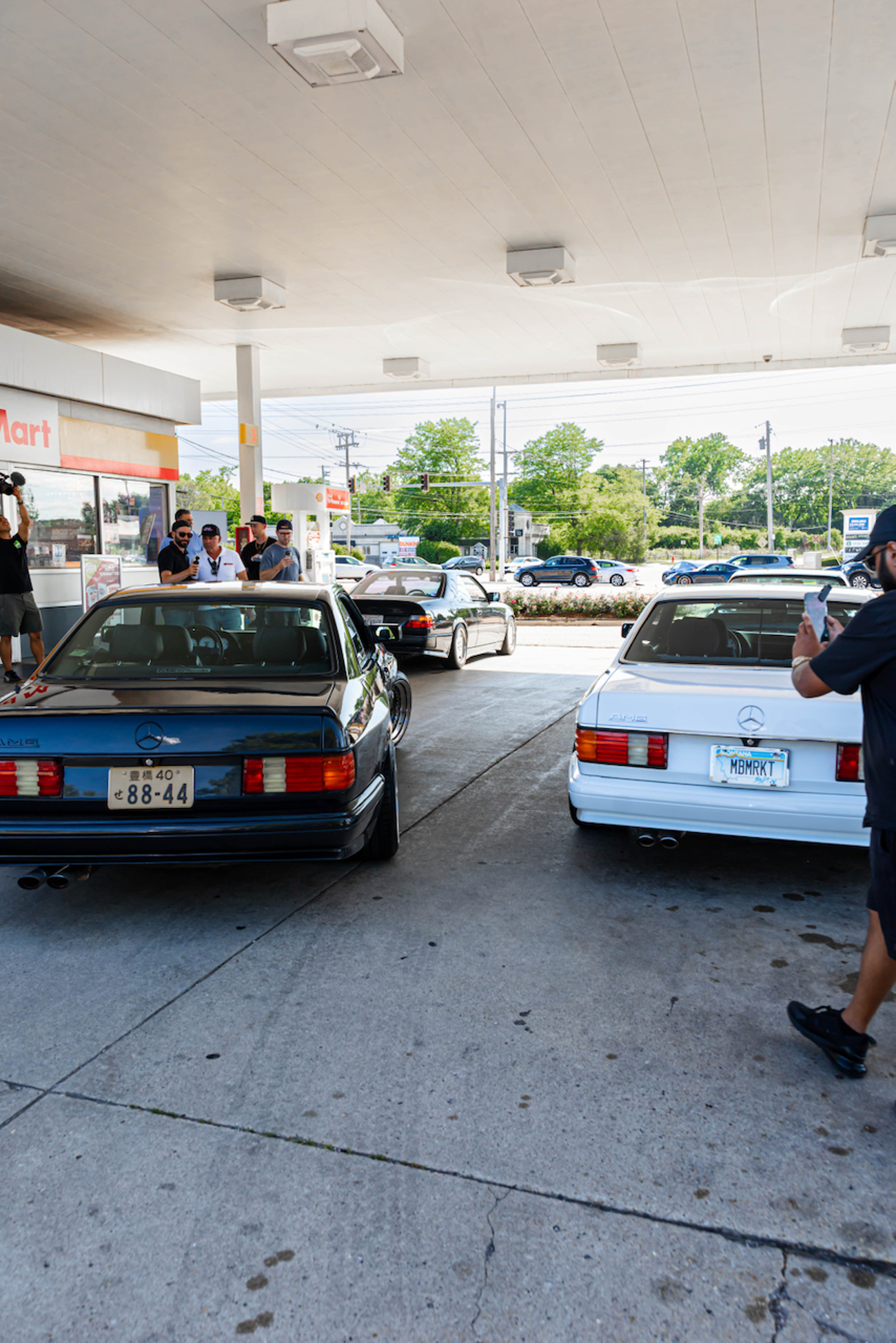
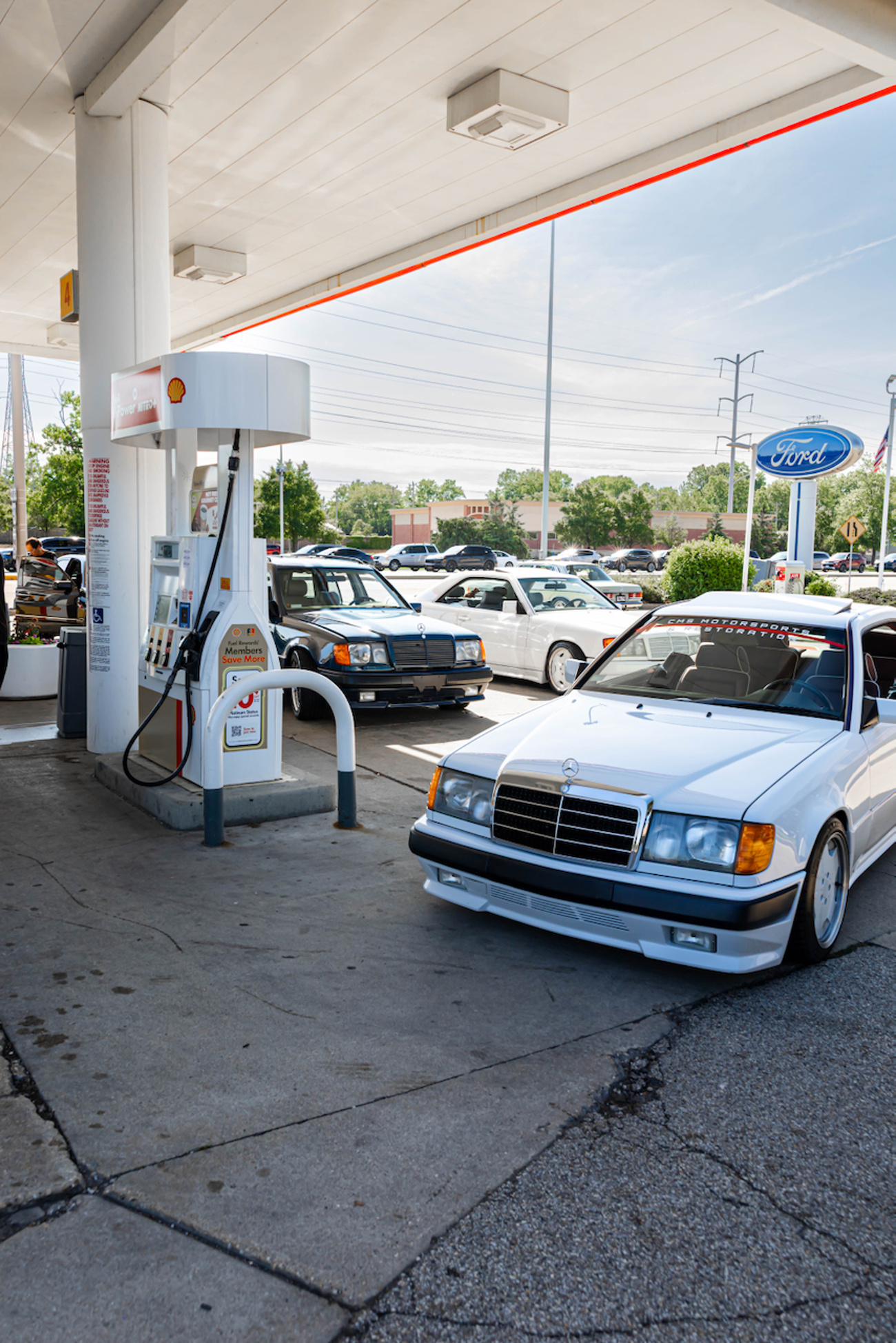
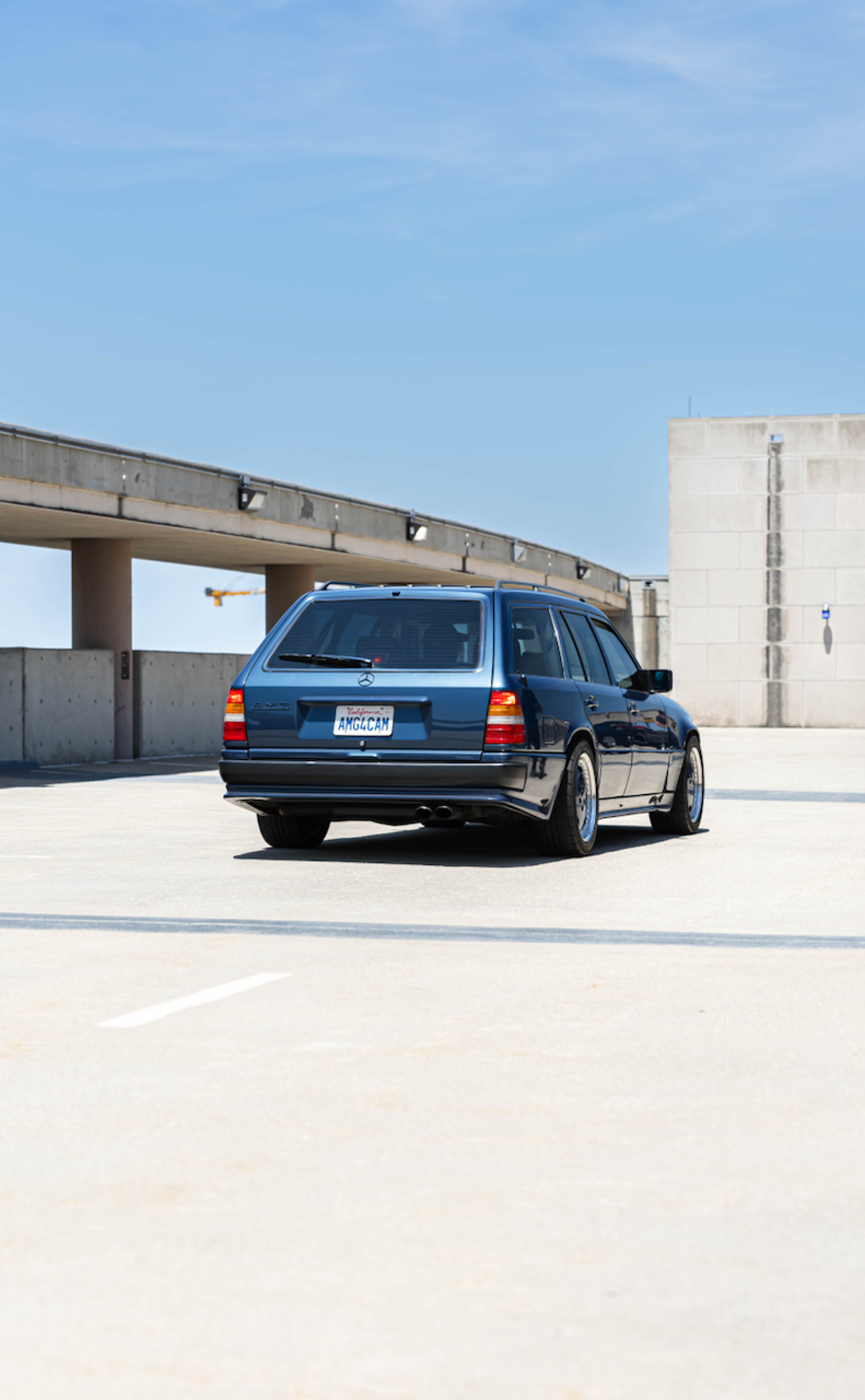
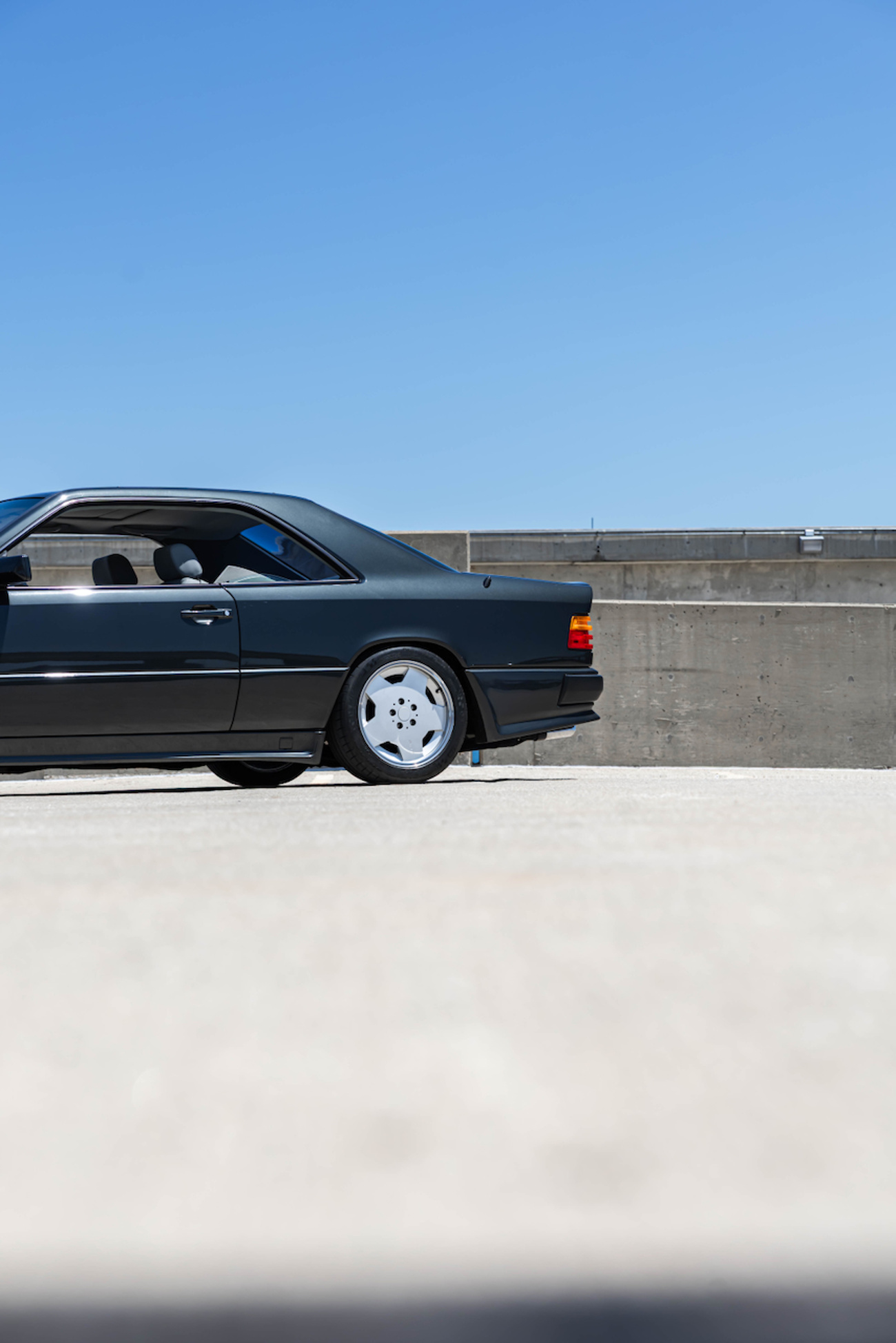
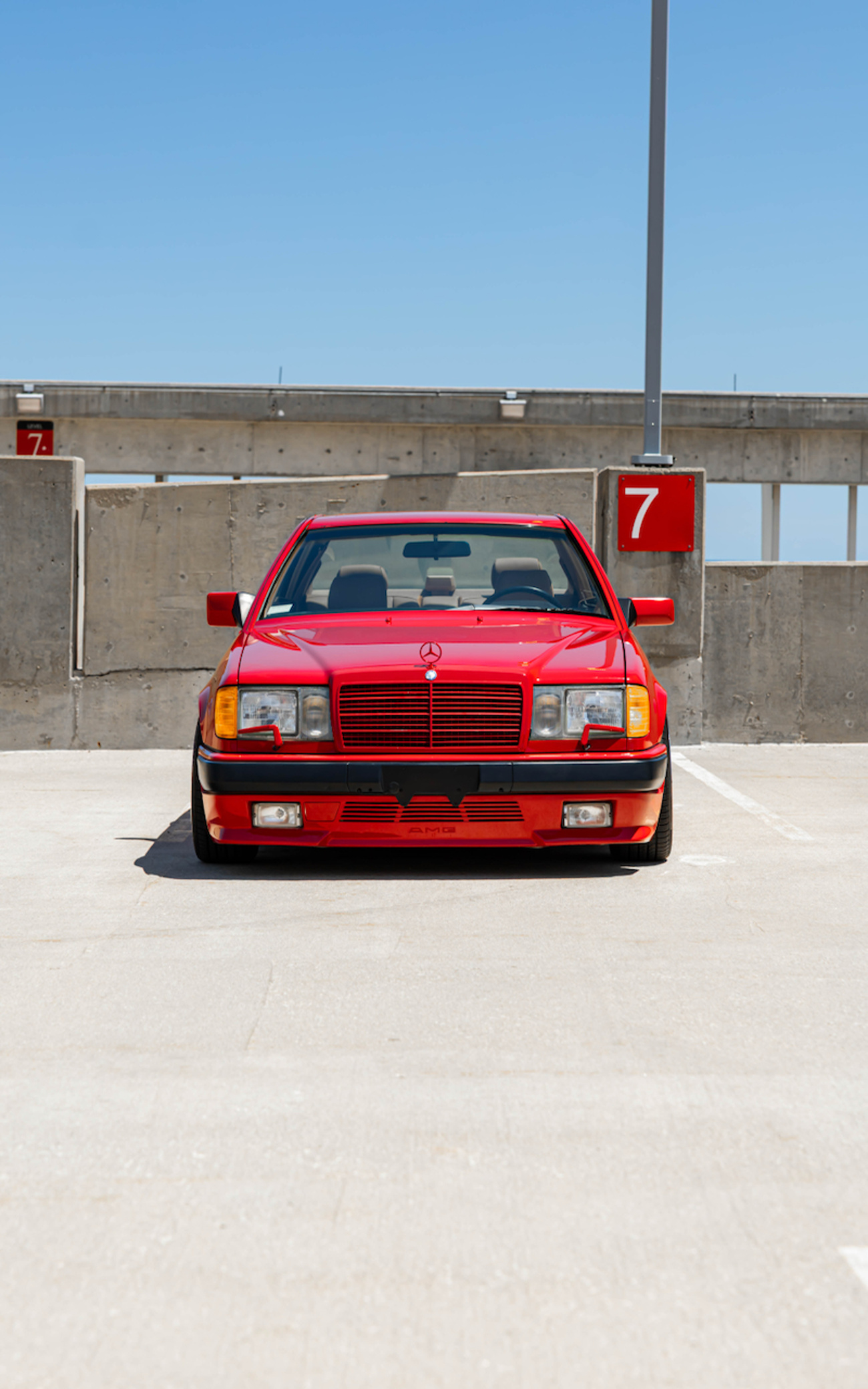
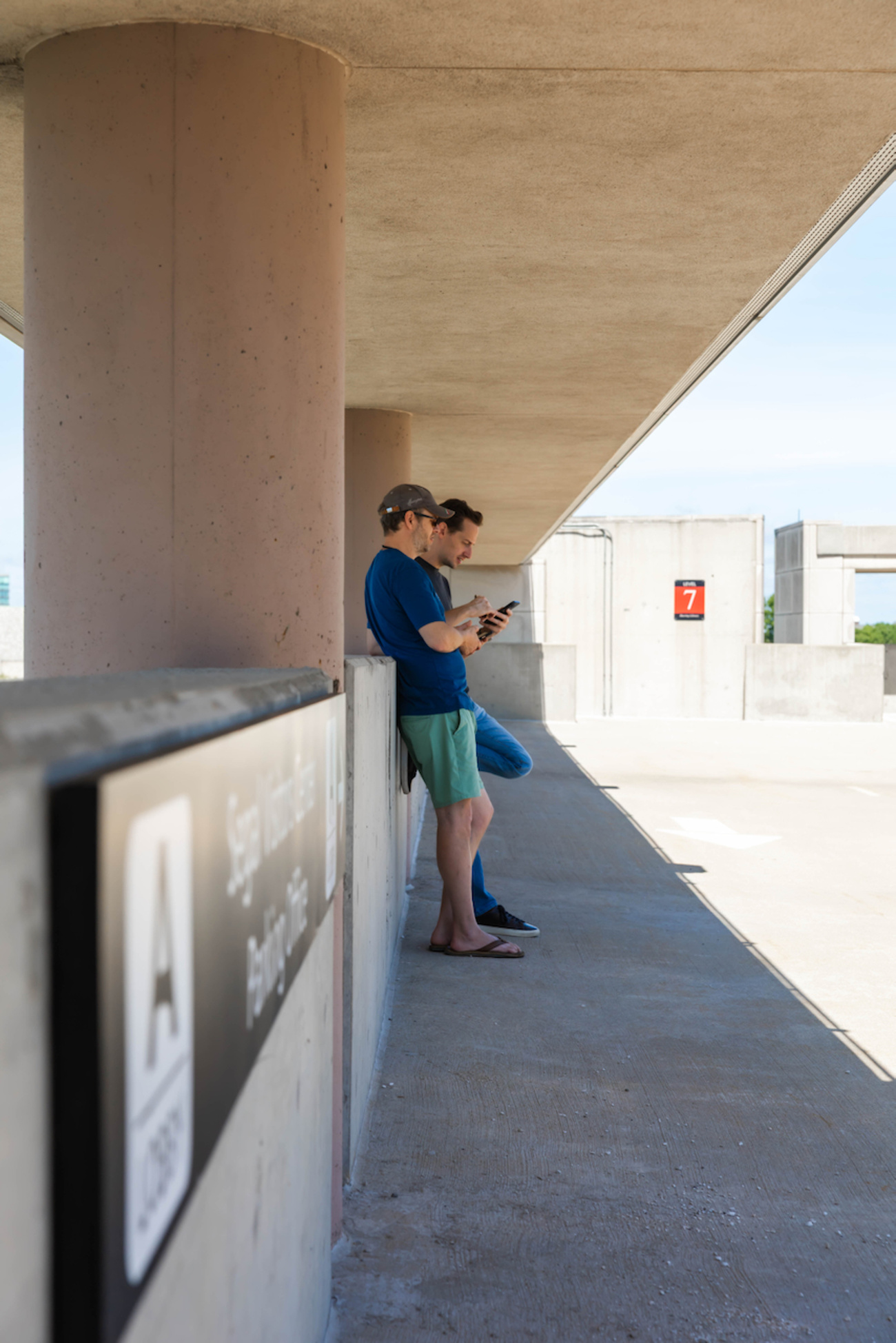
We found ourselves at the roof top of a parking deck overlooking a university and Lake Michigan as one of the largest congregations of pre-merger AMGs began to roll in. We corralled around the coffee and donuts to shake off last night with a shot of sugar and caffeine to the brain. Looking at the cars on the deck, we knew today would be a day to not forget. Some of the best photographers in the business were there taking their shots and shaking their heads at the absurdity of it all. A few hours later, the Signal Red 6.6 Hammer Coupe rolled off the truck paired with the Hammer wagon and the Hammer coupe from Blue Ridge MB. They were unloading in the middle of the street for all to see. It’s amazing to watch people not in the know drive past the Hammers and not give them a second look. Guys in new 911s and BMW M cars didn’t pay us any attention, but a younger enthusiast in a beat up Z3 lost his gourd as he drove past. We’re all in the know and understand the absurdity of the scene, but to most they looked like gaudy ‘80s Benzes. That’s what is so great about these – they are incredibly esoteric and from the outside just look like ‘80s tuner Mercedes that most would assume are worth like $5,000. A true wolf in sheep’s clothing and is oh-so rewarding when they garner the attention they deserve when one out of a thousand people understands what they’re looking at.
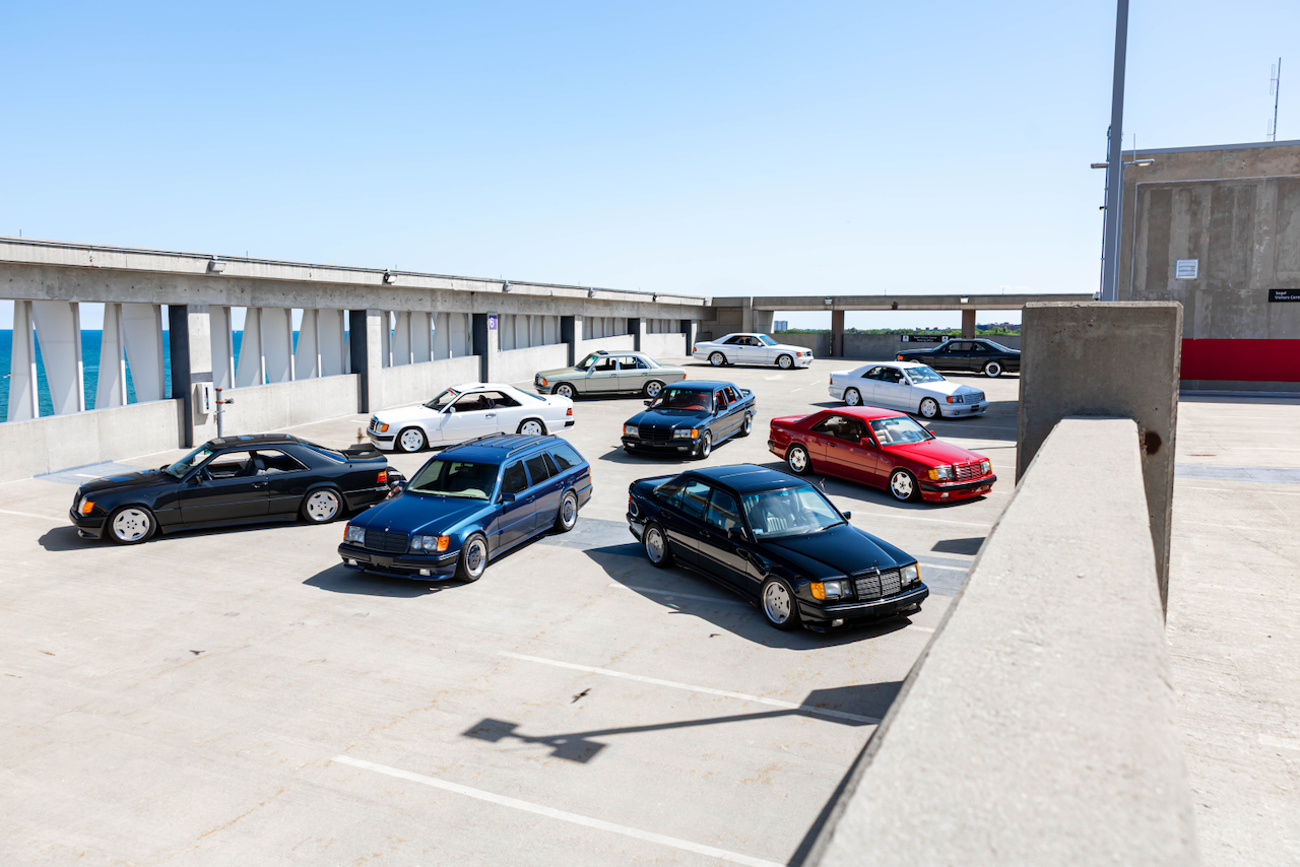
Having four real Hammers on the roof at the same moment was hard to absorb. I have a mechanically curious mind, so this was a prime opportunity to compare and contrast the Hammers. Each was hand built, so they were a lot like fingerprints where each one was unique. There was slightly different routing of wiring, unique firewalls, and experimental air intake placement focused on performance. Each engine had different spacing to the firewalls. Some were touching the heatshield/insulation while others were about two inches away. The 6.6 Coupe’s modified firewall was interesting to look at compared to the others. You could see where they cut away the primary firewall that acts as the border from the engine bay and added a modified firewall painted in the same color as the car. The gap between the two firewalls where the relays, modules, auxiliary water pump, and wiring are housed was basically deleted with all of those ancillary items moved to where the ECU and battery sat. The batteries were moved to the trunk other than on the wagon which had a smaller battery that wasn’t a 49 group unit because there just wasn’t room. The 6.6 coupe had its cold air intake routing from below the accessory belts and sucked up air that rushed under the car. The SLS reservoir on Hodgman’s Hammer wagon had a modified bracket since the DOHC M117 was so big, there was no room to keep the plastic reservoir in its original spot. Everything about these cars were so handmade and custom – it was a sight to behold. I heard some of the owners talking about how the AMG Germany 6.0-liter cars were better made than the Westmont variants. I liked the cobbled together look of the Chicago cars, however. It reminded me of a Miura or early Countaches. Not only did they have their own fingerprint, you noticed the fingerprints of their creators all over the car and see how they got better and more dialed in as Hartmut fine tuned his ability to make Hammers.
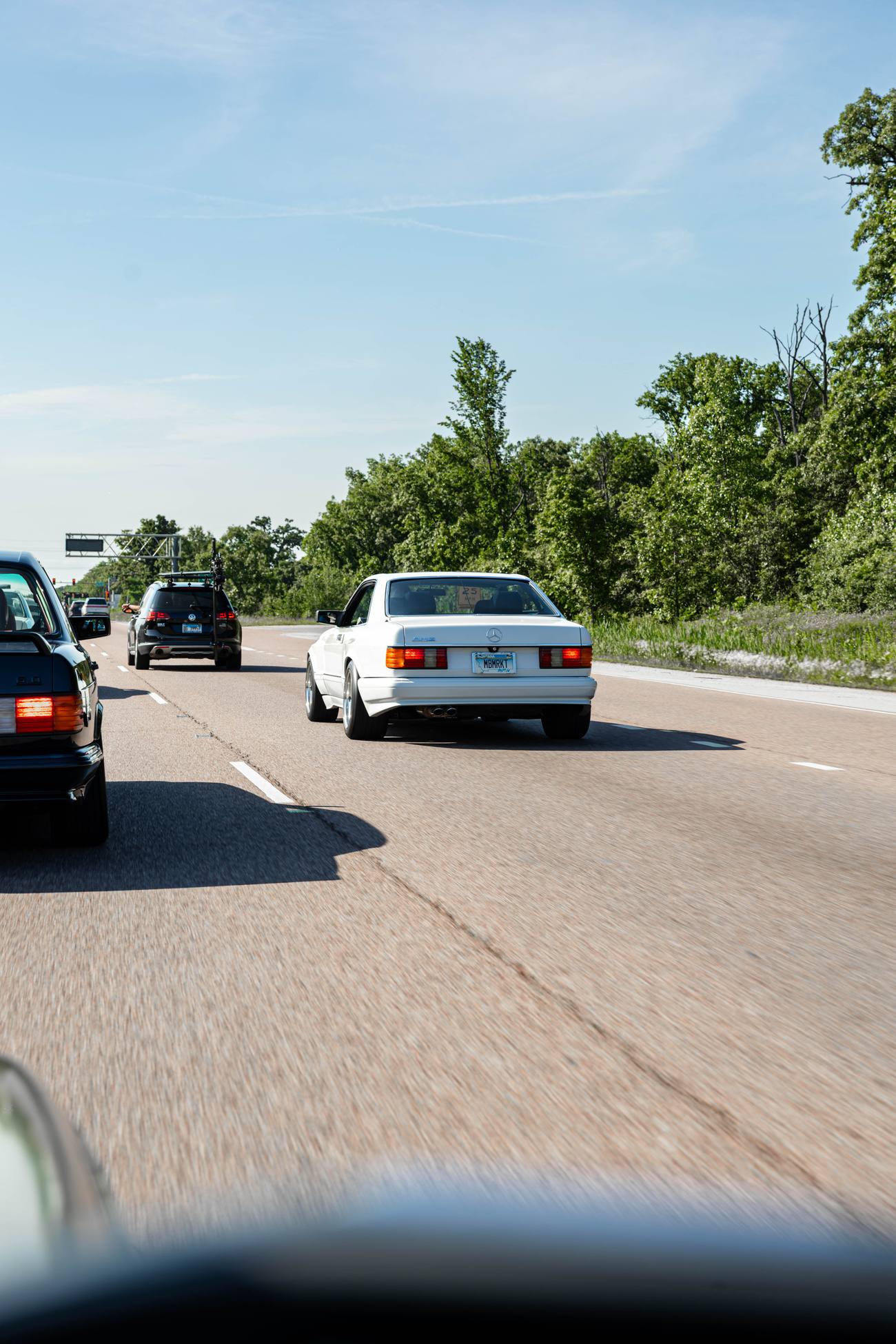
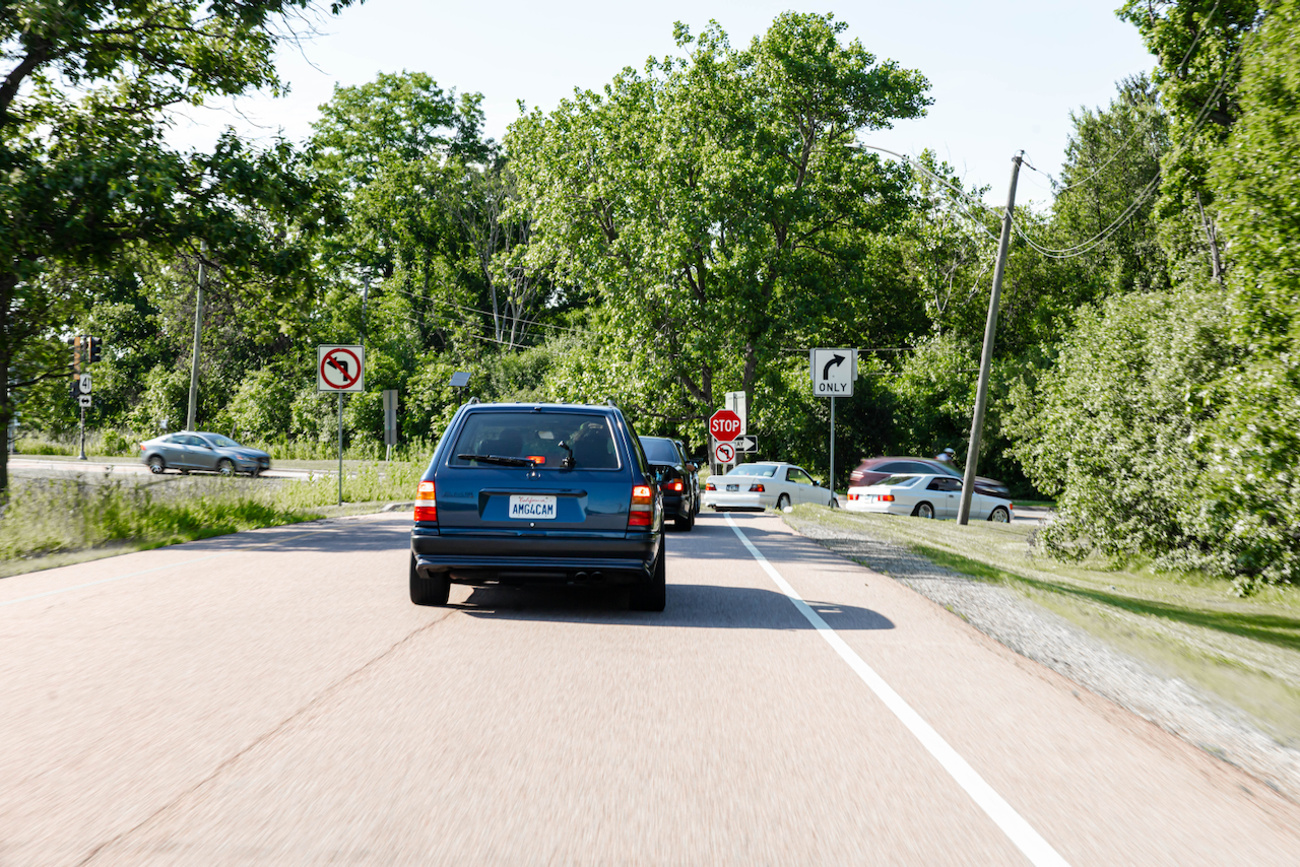
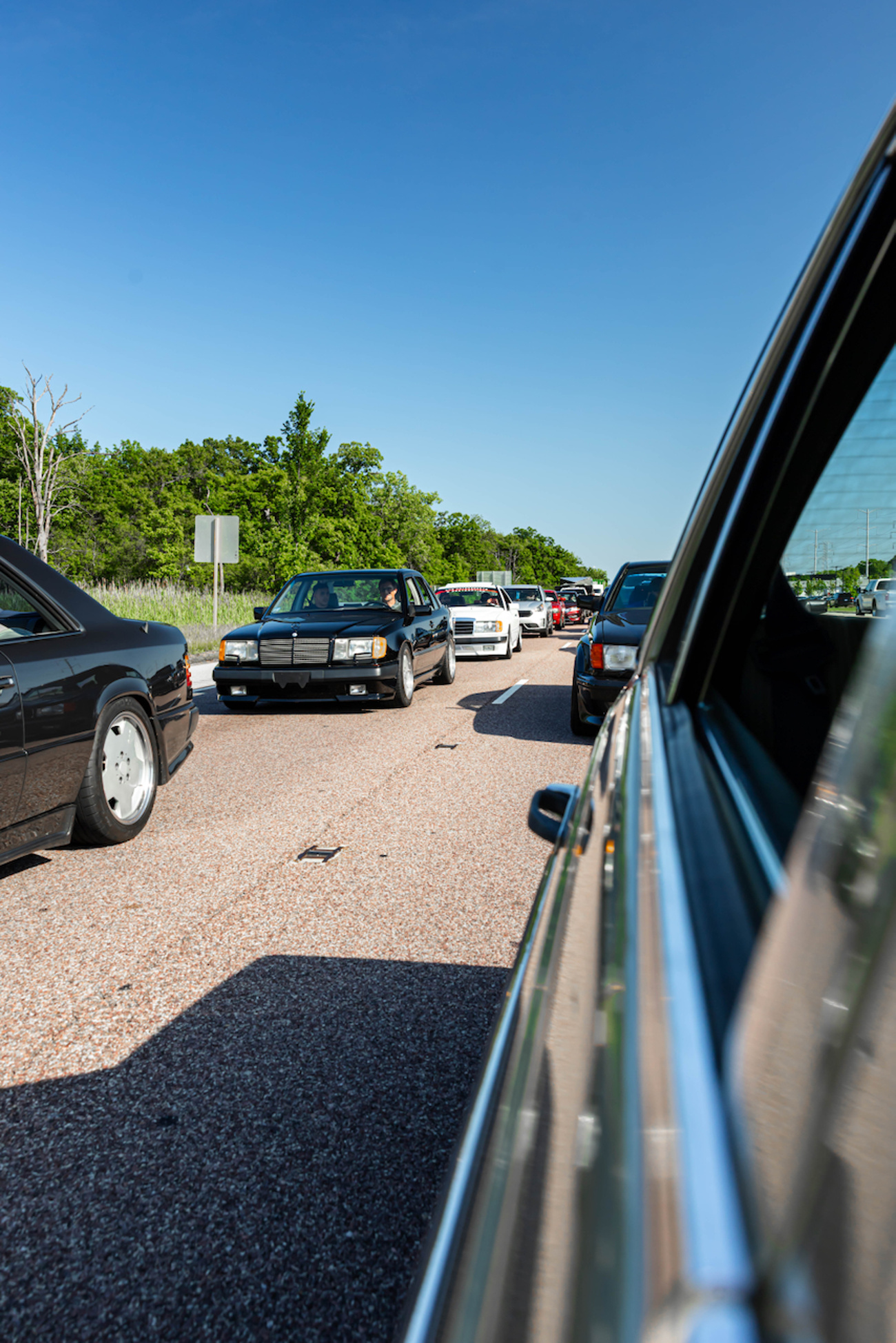
Sometimes circumstance trumps etiquette. All of the cars rolled out of the parking garage in the late afternoon for some rolling shots. About a dozen pre-merger AMGs took to the highway and mobbed through traffic. I sat in Blakley’s 560SEC AMG Widebody and attempted to capture the frenetic moment. Hodgman’s Hammer wagon was about 50 meters behind us when I saw the front end lift like a power boat. The intake noise is unlike anything I’ve ever heard. At WOT, it hurtled towards us like a blue NASA Space Shuttle with a noise that sounded like a swarm of hornets traveling through a wrapping paper tube until it passed us carrying a baritone womp as white exhaust gasses angrily exited his exhaust and spat kicked up tarmac in its wake.
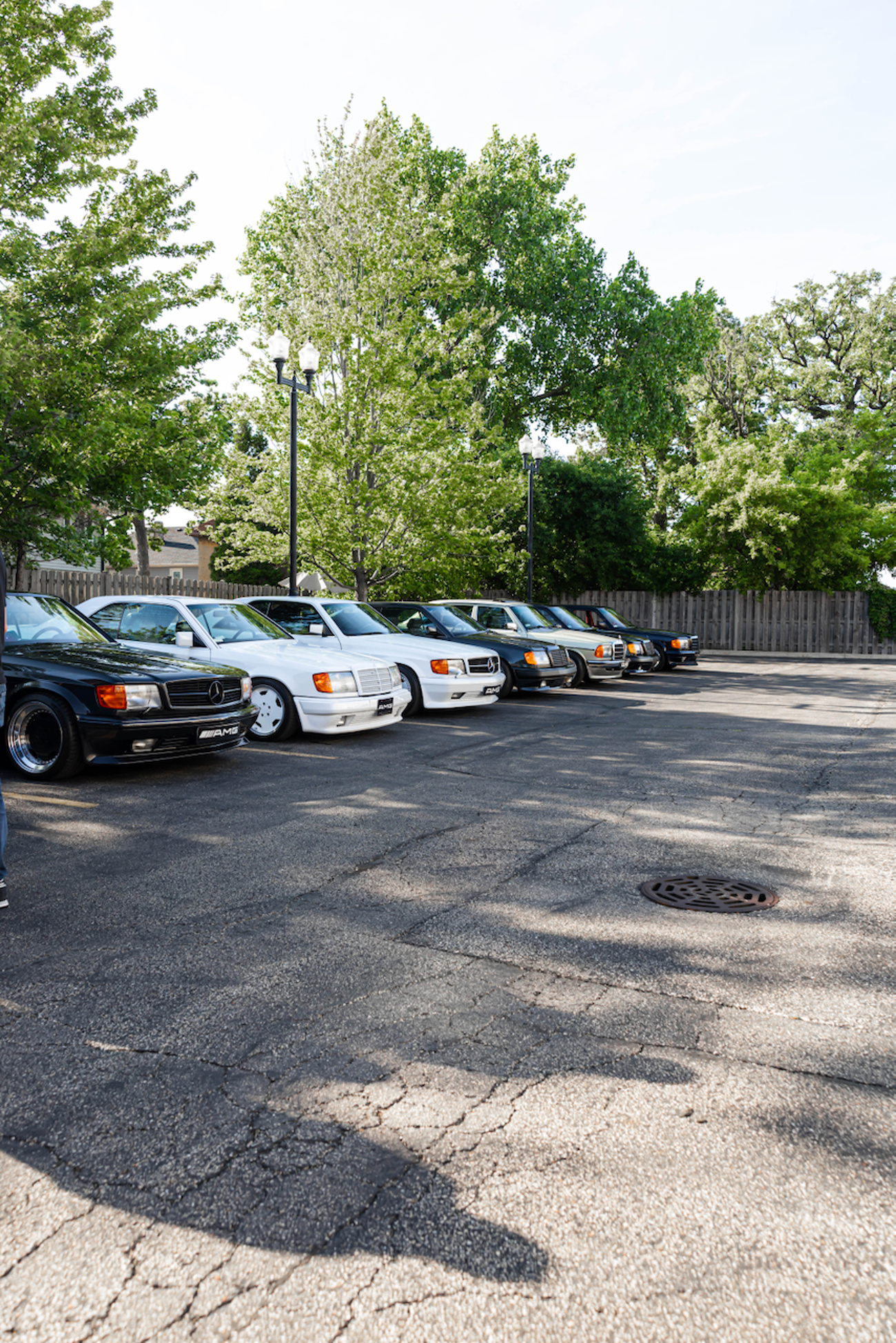
The overflow parking lot was reserved and filled with AMGs. A plain clothed born and bred Chicago security guard built like an anvil stood at the driveway to protect our cars from any mischief while we mingled and stuffed our faces with raw oysters, olives, and cured meats and washed it all down with an open bar. Everyone was there and at this point had been introduced, so guards were let down and camaraderie overtook social awkwardness. The event organizers had collected hundreds of photos from the Westmont shop and were playing a powerpoint of never before seen photos of the dealership and shop that would warrant a published book. Stephen from Curated and Alan, who just sold his 1984 500SEL 5.4 on The MB Market, enjoyed talking us through the history of some of the cars that popped up on screen for five seconds at a time. We saw pictures of his 6.6 Coupe being built with procedural photos of the strange firewall being hammered back and rebuilt. The abundance of history rich archival photos were packed with 190Es, W126, and a dizzying amount of R107s. There were so many cars that I began wondering where they all went, especially the W201s as you never see them hit the market in the U.S. Arne’s Antics, the well known Chicago based cannonballer, and I were dumbfounded at the gallery and asked if we could get copies.
With these types of events, you wish there was a tape recorder at each table. There were about ten tables with eight chairs and each was discharging enough pre-merger information and technical knowledge that it would have been an automotive historical event to capture it all for cataloging. Each table could have been turned into an internet breaking podcast. So much knowledge and many unheard of stories were being exchanged, it gave me anxiety that I couldn't be everywhere at once. I got to talking to the parts manager who worked at the shop from 1987-1989 and fired a volley of questions at him which he happily replied to each. We talked about how they would federalize gray market cars, stories of driving Ferrari Daytonas, and I asked him questions about Euro headlights and bumpers.
I asked if he ever got to drive the Hammers and he said, “Oh yeah, we had the prototype in the shop and we had this pain in the ass tire kicker who was…Romanian, I think. Richard was annoyed that he never bought anything, so he handed me the keys to the prototype Hammer and told me to ‘go scare the shit out of him.’ I saw an indicated 186 miles-per-hour on the highway and then did the same run on the way back. I think those speedometers ran a little high so it was probably 182. He couldn’t get out of the car for fifteen minutes when we got back to the shop because his legs were shaking so badly.”
I was introduced to Richard Buxbaum as we share an interest in parrots. He has owned his for over forty years and he used to hang out at the shop while the Hammers were being built. We exchanged photos of our beloved parrots as mine also hangs out with me when I’m working on my personal Mercedes at home.
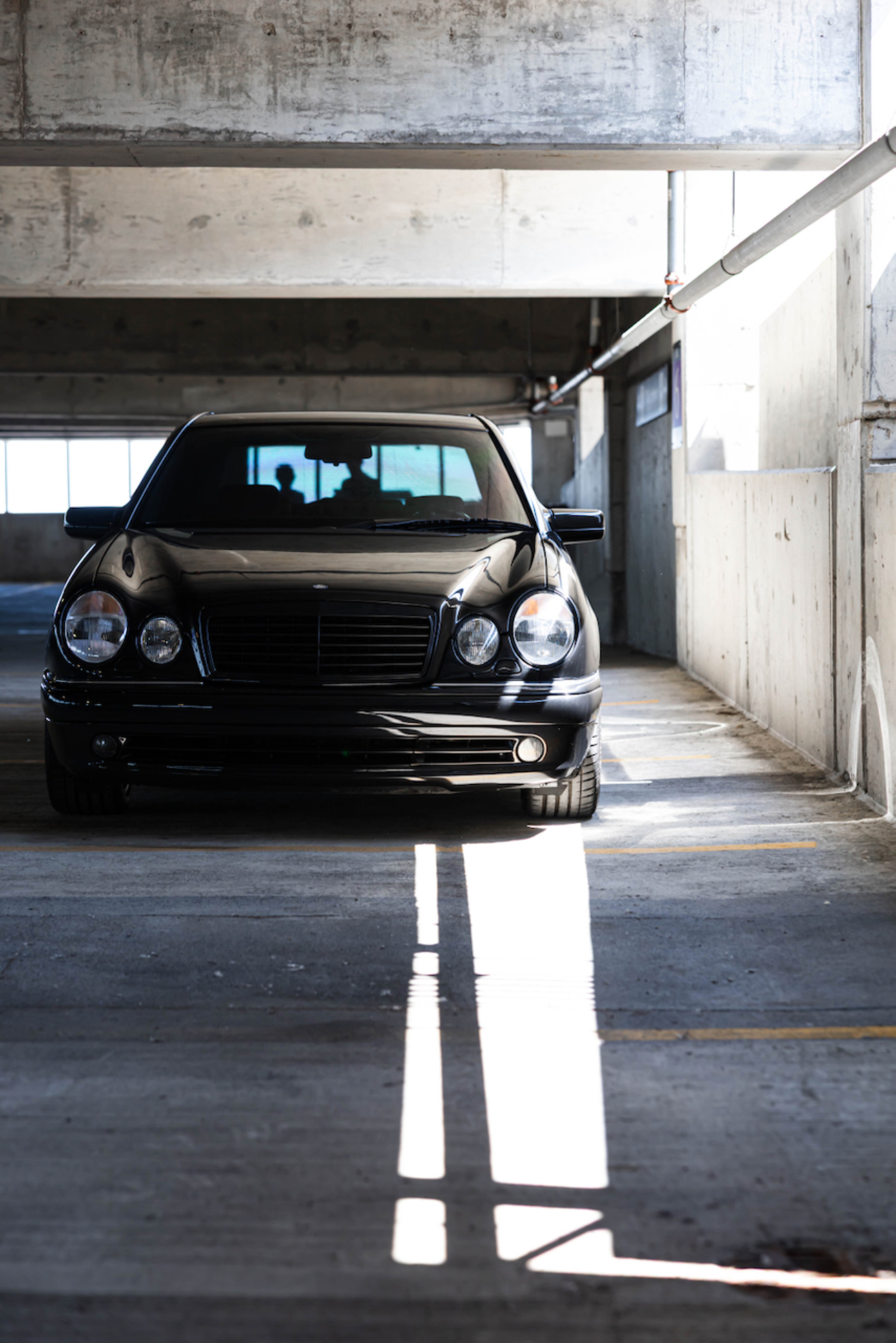
Ben Everest, Blakley Leonard, and I shuffled back to our cars at around midnight buzzing from the nonstop, on-cam excitement of the day. I hopped in Blakley's 280E with Ben. We shot like missiles back to our stomping grounds in Evanston, passing Kevin McCallister’s Home Alone (1990) house as we mused about the Euro M110 under the hood of our car. The rest of the vehicles filed slowly into our rented out parking garage that had 24 hour security as we ran control of the top floor. The surreal sights and sounds of these cars together never begged to tire.
Coffee & Classics hosted by Fuelfed in the northern Chicago ‘burbs is further proof that the Chicago car scene is one of the best in the country. The Mercedes-Benz scene in this part of the U.S. obliterates what we have back in Atlanta. The cars are owned by old money, who are both educated, passionate, and wonderful stewards to these machines. The community and support the classics have in this part of the country rival chapters in California and surpass what we have in Atlanta (which is no slouch). People knew what a Hammer was and of their significance. These are the local heroes after all. It was refreshing to see the younger generations appreciate the pre-merger story. I think all of us younger enthusiasts who own or aspire to own these cars that attended the 233 West event had a realization.
A lot of these guys are getting old who worked at Westmont in the ‘80s. As a thirty-five year old who grew up with these Mercedes and continues to daily drive them, I had to detach myself from the familiarity of these cars and take an unbiased account of what is happening.
These guys won’t be around forever.
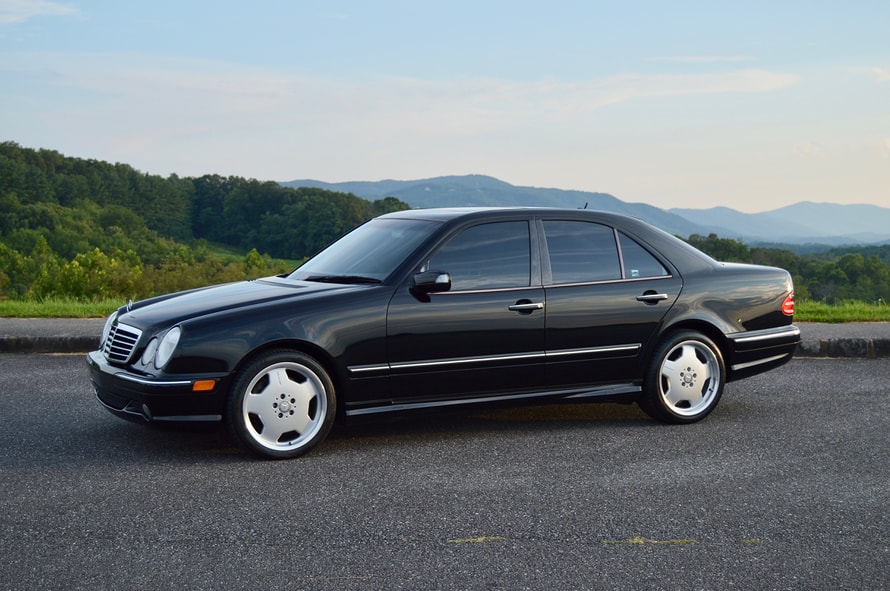
The morbid part of me, the part who is in a constant state of crushing existential anxiety, took a step back and didn’t see this event as a celebration but as a communion of cataloging. The original crew have so many unheard of stories that have to be shared and documented by people like me. Atlanta is a city where classic Mercedes-Benz technicians are phasing out to retirement. Not a lot of people know how to set the points of a K-Jetronic M117 engine or take the multi piece heads off of a DOHC M117 Hammer engine. The internet has a huge, vacant hole that is void of information about these cars. The enthusiast masses think a 1999 C43 AMG is a Hammer. People call M119 6.0 W124 cars “Gen II Hammers” as a way of boosting the value of their collections by riding the coat tails of the original Westmont cars. I’ve heard people at your standard car shows call Aero II Monoblock wheels “Hammers.” There is so much misinformation in this automotive world surrounding real W124 Hammers that history is being altered both innocently by use of uneducated diction and by people whose aim is to manipulate the market for their own monetary gain.
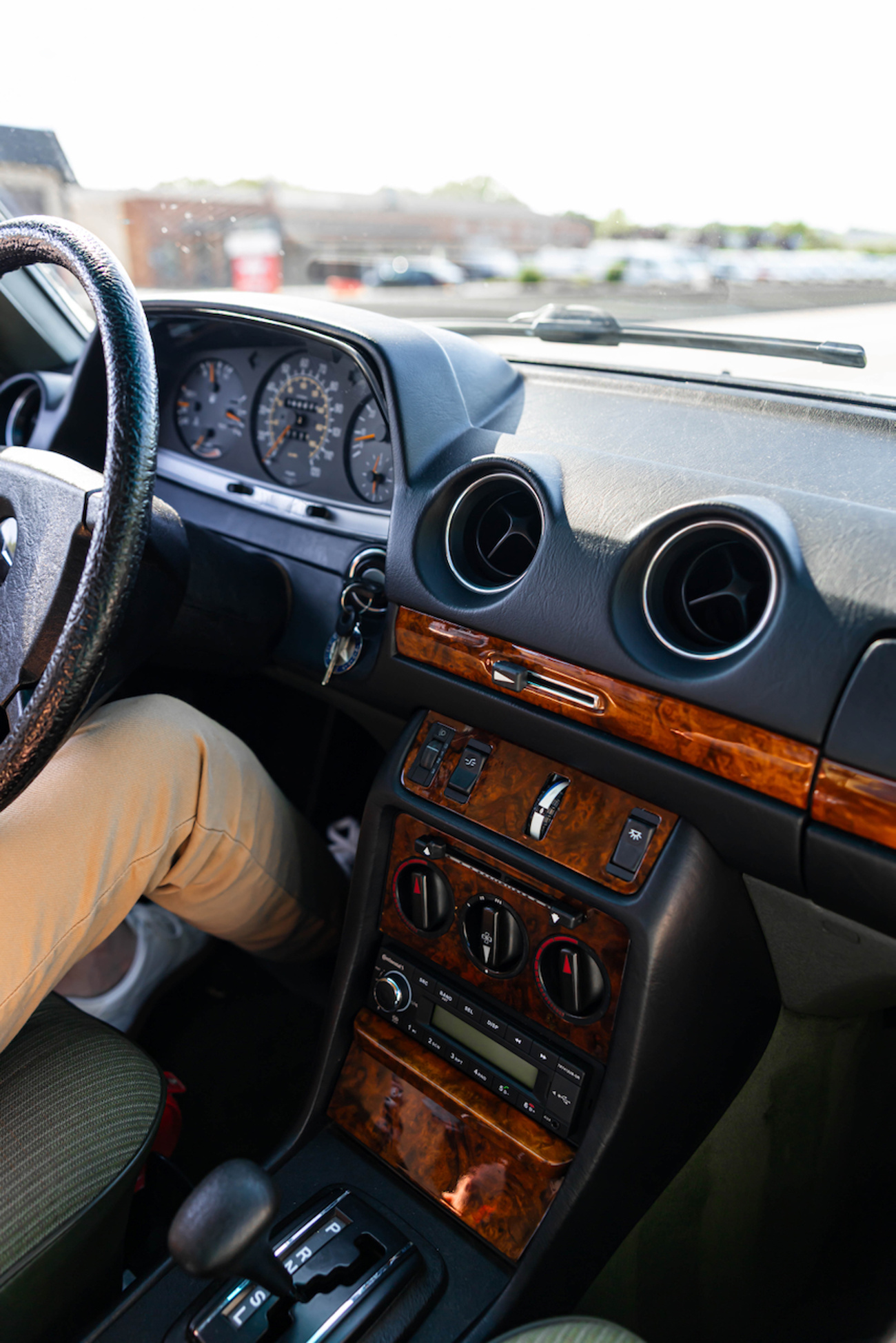
Events like 233 AMG West are essential in bolstering the historical significance of the pre-merger AMG cars by celebrating their existence and the people who made them. This made me realize a one time event like this will have to be repeated. If we are to keep Hammers and pre-merger cars from disappearing into esoterica or twisted into some sort of altered history, events like this must continue to happen.
By having the original crew interact with the younger talent, it is going to allow us to keep classic AMGs on the road. As these cars become more popular and more knowledge is accurately spread across the car community by the attendees of the 233 West event, it will create true value and more people will appreciate these machines, because the truth is far more interesting than fiction.
Get the best of The MB Market directly in your inbox every day. Subscribe for a curated list of our top market listings and articles!
0 Comments